










Basic Bowling Tips, BowlersMart IQ Detroit Coaching, Bowling How To's & Coaching Tips, Bowling Tips & Coaching Articles
How to Identify Bowling Pin Formations?
You’re watching league bowlers casually call out pin combinations like “3-6-10” or “4-7-10” while you’re still counting pins one by one to figure out what’s left standing. They seem to instantly recognize every spare combination, while you’re squinting down the lane trying to remember which pin is which number.
Understanding bowling pin formations isn’t just about sounding knowledgeable – it’s essential for effective spare shooting, strategic planning, and communicating with teammates during league play. When you can instantly identify pin combinations, you can focus on execution instead of figuring out what you’re looking at.
This guide will teach you the complete pin numbering system, common formations you’ll encounter, and proven methods for memorizing pin positions so you can identify any spare combination at a glance.

Master Bowling Pin Formation: Complete Pin Numbering Guide
Pin Formation Purpose: Instant recognition of pin combinations enables faster spare shooting decisions and better strategic planning during competition.
Understanding the 10-Pin System
The bowling pin formation follows a precise numbering system that every bowler needs to master. These 10 pins form an equilateral triangle called the “pin deck,” with each pin positioned exactly 12 inches apart from its neighbors.
The Triangle Formation Layout
Pin Deck Structure
10 pins arranged in 4 rows forming an equilateral triangle, with the 1-pin (headpin) closest to the bowler.
Precise Spacing
Each pin is positioned exactly 12 inches from its adjacent pins, creating consistent angles for spare shooting.
Key Point: Understanding pin positions and board locations helps you aim more precisely for spare conversions and strike targeting.
The Complete Pin Numbering System
Learning the pin numbering system is like learning the alphabet of bowling – once you know it, everything else becomes easier to understand and communicate.
Pin Numbers by Row Position
Front Row: Pin 1 (Headpin) – The most important pin, closest to the bowler
Second Row: Pins 2 and 3 – Left and right of the headpin respectively
Third Row: Pins 4, 5, and 6 – From left to right behind the second row
Back Row: Pins 7, 8, 9, and 10 – The four pins furthest from the bowler
Pin Numbers from Bowler’s Perspective
Left Side Pins: 7, 4, 2, 1 (from back to front on the left)
Center Pins: 8, 5, 1 (straight down the middle of the pin deck)
Right Side Pins: 1, 3, 6, 10 (from front to back on the right)
Pin Positions on Lane Boards
Pin 1 (Headpin): Located on the 20th board (center of the lane)
Pin 2: 17th board (left of headpin) / Pin 3: 23rd board (right of headpin)
Pins 4-5-6: 14th, 20th, and 26th boards respectively
Pins 7-8-9-10: 11th, 17th, 23rd, and 29th boards respectively
💡 Memory Tip: The pin numbers follow a logical pattern – think of reading from left to right, top to bottom, like reading a book.
Test Your Knowledge: Can You Identify These Pin Formations?
Now that you understand the numbering system, test your knowledge with these common spare combinations you’ll encounter during league and tournament play.
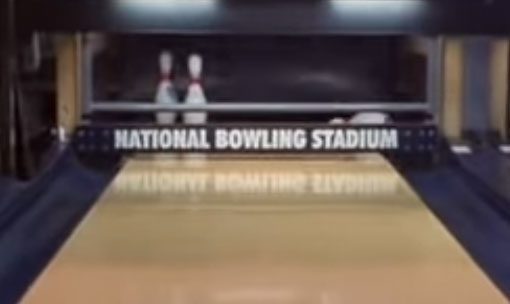
Formation A
Can you identify this spare?

Formation B
What pins are standing here?

Formation C
Name this pin combination.
Learning from Bowling History: Famous Pin Combinations
Even professional bowlers face challenging spare combinations. Let’s learn from some famous examples, including the memorable scenes from the classic bowling movie “Kingpin.”
Kingpin Movie Pin Combinations
Roy Munson’s 3-6-10: A challenging right-side spare combination that requires precise angle control – not ideal in a championship match!
Big Earn’s 1-2-4: A left-side cluster that should be convertible with proper technique – another missed opportunity in the showdown.
Why Pin Recognition Matters
Faster Decision Making
Quick pin identification allows more time to focus on spare shooting technique and target selection.
Better Communication
Clear pin number knowledge improves team communication during league play and coaching situations.
Practice Lesson: Understanding pin formations helps you visualize and plan spare conversions before stepping onto the approach. The more you practice identifying combinations, the more automatic it becomes during competition.
Essential Pin Combinations Every Bowler Should Know
Certain pin combinations appear frequently in bowling. Learning to recognize these patterns instantly will improve your spare shooting consistency and strategic planning.
Most Common Spare Combinations
Corner Pins
7-10 Split: The most famous (and challenging) spare in bowling
4-6 Split: Middle pins requiring precise angle
Side Clusters
2-4-7: Left side cluster spare
3-6-10: Right side cluster spare
Single Pins
7-pin: Most common single pin leave
10-pin: Right-handed bowler’s challenge
Splits and Difficult Combinations
7-10 Split: The “bedposts” – requires hitting one pin into the other or an extremely lucky bounce.
4-6-7-10 Split: “Big Four” – nearly impossible to convert, requires exceptional pin action.
2-7 or 3-10 Split: “Baby splits” – challenging but convertible with proper angle and speed control.
Proven Methods for Memorizing Pin Positions
Learning pin positions doesn’t have to be difficult. These proven techniques will help you memorize the numbering system quickly and retain it permanently.
Visual Memory Techniques
Triangle Visualization: Picture the pins as a triangle with the 1-pin at the top point, then count left to right, row by row.
Clock Method: Think of pins 7, 4, 2, 1 as the left side of a clock, and 1, 3, 6, 10 as the right side.
Story Method: Create a memorable story connecting the pin numbers in sequence to help recall their positions.
Practice Exercises
Pin Calling: Practice calling out pin combinations quickly when watching other bowlers or during practice.
Flash Cards: Create cards with pin diagrams on one side and numbers on the other for quick review.
Mental Mapping: Visualize the pin deck in your mind and practice identifying different combinations without looking.
Complete Bowling Pin Formation Reference
Use this comprehensive infographic to understand pin positions, board locations, and row alignments. Remember, all pins are positioned exactly 12 inches apart, creating consistent angles for spare shooting strategies.

Key Reference Points
Pin Spacing: 12 inches between all adjacent pins creates predictable deflection angles.
Board Alignment: Pins align with specific lane boards, helping with targeting and spare shooting.
Row Structure: Four distinct rows create natural groupings for understanding pin relationships.
Applying Pin Knowledge to Your Game
Understanding pin formations is just the beginning. Here’s how to use this knowledge to improve your spare shooting and overall bowling performance.
Spare Shooting Strategy
Target Selection
Use pin board positions to select precise arrow targets for optimal spare conversion angles.
Ball Speed Control
Adjust ball speed based on pin combinations – some spares require specific speeds for proper pin action.
Communication Benefits
Team Play: Clear pin identification improves communication with teammates during league strategy discussions.
Coaching: Precise pin language helps when receiving or giving technical advice about spare shooting.
Mental Game: Quick recognition reduces decision time and increases confidence in spare situations.
Final Thoughts
Mastering bowling pin formations is a fundamental skill that pays dividends throughout your bowling journey. From casual games with friends to competitive league play, instant pin recognition gives you a significant advantage. The numbering system follows logical patterns that become second nature with practice.
Start by memorizing the basic 1-2-3, 4-5-6, 7-8-9-10 pattern, then practice identifying common combinations during your next bowling session. The more you use this knowledge actively, the more automatic it becomes. Soon you’ll be calling out pin combinations like a seasoned pro.
Every great bowler speaks the language of pin formations fluently. Master this fundamental knowledge, and you’ll find that spare shooting becomes more strategic, team communication improves, and your overall bowling IQ reaches new levels.
More Bowling Articles You May Enjoy

Rookie Brandon Bonta Rolls 300 to Win PBA Players Championship 2026
📋 Quick Facts: 2026 PBA Players Championship | Stepladder Finals at the International Training and [...]
Feb

How Often & How Should I Clean My Bowling Ball?
How Often Should I Clean My Bowling Ball? Bowling balls are precision tools, and like [...]
Feb
Brunswick Drops 5 New Bowling Balls for 2026: Complete Specs, Reviews & Comparisons
By BowlersMart Staff | Published February 16, 2026 | Updated February 19, 2026 Brunswick’s family [...]
Feb
4 New Storm Bowling Balls for Spring 2026: Full Guide
Storm Products Inc. just loaded up bowlers’ bags for the spring 2026 season. Four new [...]
1 Comments
Feb

SWAG Just Released 6 New Performance Bowling Balls
SWAG Bowling released six new bowling balls on February 17, 2026: the Judgement Hybrid ($184.95), [...]
Feb


16 New Bowling Balls Available in 2026
*Last Updated March 14, 2026 | Updated Monthly with New Releases Thirty-one new bowling balls [...]
3 Comments
Jan

 Balls
Balls Shoes
Shoes Bags
Bags Accessories
 Apparel
 Deals
Deals
Pingback: What is a Spare in Bowling? - Stars and Strikes