









Bowling How To's & Coaching Tips, Bowling Shoes, Bowling Tips & Coaching Articles, Buying Guides
Bowling Shoe Guide: Soles and Heels Explained
By BowlersMart Staff | Originally Published October 14, 2024 | Updated February 2026
You just bought your first pair of performance bowling shoes, and inside the box are a handful of small pads with numbers on them. Or maybe you have been bowling for years but never really understood which sole or heel to use—and when. Either way, choosing the right combination of soles and heels is one of the easiest ways to improve your consistency on the approach, and it does not require a single change to your bowling ball or your technique.
This guide breaks down everything you need to know about bowling shoe soles and heels: the three types of pads, how the number system works, what affects your slide, and how to find the combination that matches your game. Whether you bowl once a week or compete in tournaments across the country, understanding your shoe setup gives you a real edge every time you step up to the lane.
Quick Overview: Performance bowling shoes use interchangeable soles and heels to give you control over how much you slide during your approach. Lower numbers mean less slide (more grip), and higher numbers mean more slide. Choosing the right combination depends on your bowling style, the approach surface, and conditions like humidity. This guide covers it all — plus tips on when to swap and how to care for your pads.
What Are Bowling Shoe Soles and Heels?
Performance bowling shoes are built with removable pads on the bottom that attach with hook-and-loop (Velcro) fasteners. These pads fall into three categories, and each serves a different purpose during your approach and delivery.
Slide Soles
These go on your sliding foot (left foot for right-handed bowlers, right foot for left-handed bowlers). Made from microfiber, leather, or felt, slide soles control how far you glide on your final step before releasing the ball. They are the most commonly swapped pad in your setup.
Traction Soles
These go on your push-off foot (right foot for right-handed bowlers, left foot for left-handed bowlers). Usually made from rubber, traction soles provide grip during your approach so you have a stable platform to push off from and maintain balance.
Brake Heels
These attach to the heel of your slide shoe. Made from rubber or leather, brake heels act as the braking mechanism at the end of your slide. They control how quickly you come to a stop after your final step, directly affecting balance at the foul line.
Why It Matters: Your slide on the approach is just as important as ball selection. Too much slide and you lose control of your release. Too little slide and you risk sticking, falling, or pulling your shot offline. The right sole and heel combination gives you a smooth, repeatable delivery every single time.
How the Bowling Shoe Sole Number System Works
Most bowling shoe manufacturers use a numbered scale to rate their soles and heels. The system is straightforward: a lower number means less slide (more friction), and a higher number means more slide (less friction). New performance shoes typically ship with a mid-range setup—often an S8 slide sole and an H5 brake heel—giving you room to adjust in either direction depending on your needs.
| Sole Range | Slide Level | Material | Best For |
|---|---|---|---|
| S2 – S4 | Low (More Grip) | Rubber / Sawtooth Microfiber | Bowlers with fast feet, slick approaches, or those who prefer a short slide |
| S5 – S7 | Medium (Balanced) | Microfiber / Leather Blend | Most league bowlers, standard approach conditions, a great starting point |
| S8 – S10+ | High (Maximum Slide) | Smooth Microfiber / Felt / Leather | Tacky approaches, humid conditions, or bowlers who prefer a long, smooth slide |
Pro Tip: Dexter uses odd-numbered soles (S3, S5, S7) as combination pads that blend two materials together—creating a middle ground between the sole above and below it. This gives you even more fine-tuning options. For the complete Dexter lineup, see the official Dexter Sole and Heel Guide.
Brake heels follow a similar logic. A lower-numbered heel (like H2) provides maximum braking, stopping your slide quickly. A higher-numbered heel (like H7 leather) allows your heel to glide slightly before coming to a stop, creating a smoother transition. The H5 Saw Tooth heel is the most common default and works well for most bowlers as a balanced starting point.
Why Your Slide Changes from Day to Day
Even if your bowling form stays the same, your slide can feel completely different depending on outside factors. Understanding what affects your slide helps you make smarter adjustments instead of guessing.
Approach Surface
Some bowling centers have newer synthetic approaches that tend to be slicker, while older wood approaches may feel stickier. The same shoes can feel completely different from one center to another. If you bowl at multiple locations or travel for tournaments, this is where having extra soles pays off immediately.
Humidity and Weather
Humidity is the number one environmental factor that changes your slide. On humid days, moisture in the air gets absorbed by the approach surface, making it tackier and reducing your slide. Dry conditions have the opposite effect. This is why the same setup might work perfectly in winter but feel off during the summer months.
Foot Traffic and Time of Day
Approaches get worn and conditioned throughout the day as bowlers walk on them. Early morning league sessions may feel different than late-night open bowling because of the buildup of dust, moisture, and wear on the approach surface over time.
Sole Wear and Debris
Your soles collect lane oil, dust, and dirt from the approach area over time. Even walking off the approach without shoe covers changes the performance of your slide. Dirty soles create unpredictable slide, which is why regular cleaning with a wire shoe brush makes a noticeable difference.
Important: Always wear a shoe cover when leaving the bowling area or switch into your street shoes. Walking on carpet, concrete, or tile contaminates your slide sole and can completely change your performance. This is the single most common reason bowlers experience inconsistent slide.
How to Choose the Right Sole and Heel Combination
Finding your ideal setup does not require buying every sole and heel available. Most bowlers can dial in their slide with just two or three slide sole options and one or two heels. Here is a practical starting framework based on your situation.
Start With What Comes in the Box
Performance shoes from Dexter, Brunswick, 3G, and other brands ship with a default sole and heel already installed. For Dexter SST shoes, that is usually an S8 slide sole and an H5 Saw Tooth brake heel. For the Dexter THE 9 series, it typically includes a THS7 slide sole, H5 ST, THT2 traction sole, and H2 universal brake heel. Bowl several sessions with the stock setup before making any changes — this establishes your baseline.
Adjust One Thing at a Time
If your slide feels too short or you are sticking on the approach, try a higher-numbered slide sole first. If your slide feels too long or out of control, drop to a lower number. Resist the urge to change both the sole and heel at the same time — that makes it harder to isolate what is actually working.
Heel Adjustment Shortcut: Sometimes you do not even need to change your slide sole. Swapping just the brake heel — for example, going from an H5 rubber heel to an H7 leather heel — can be enough to smooth out your finish without completely changing your slide length. This is an underused adjustment that experienced bowlers rely on regularly.
What Most Bowlers Need in Their Bag
For most league and tournament bowlers, carrying three to five slide sole options and two heel choices provides enough flexibility for any condition you will encounter. A practical setup might look like this:
Slide Soles to Carry
S4 or S6 — For slick approaches or when you need less slide
S8 — Your everyday default for normal conditions
S10 — For tacky approaches, humid days, or sticky centers
Brake Heels to Carry
H5 Saw Tooth — The standard rubber heel for balanced braking
H7 Leather — A smoother transition from slide to stop for bowlers who want less abrupt braking
Sole and Heel Compatibility by Brand
Not all soles and heels are universal — most are designed for specific shoe models within a brand. Here is what you need to know about compatibility across the major brands.
| Brand | Shoe Lines | Sole System | Notes |
|---|---|---|---|
| Dexter | SST 8, THE 9, C9 | SST / T·H·E Technology | Widest selection of soles and heels. SST soles fit SST shoes; T·H·E soles are exclusive to THE 9 and C9 models. Heels are universal across all Dexter performance shoes. |
| Brunswick | Various performance models | Numbered slide soles | Brunswick slide soles use the same number system (S2–S10). Soles are oversized and trim-to-fit for any shoe size. |
| 3G / Storm | Racer, Tour Ultra | Interchangeable pads | 3G shoes include two soles and three heel options in the box. Quick-change mechanisms for easy swaps between games. |
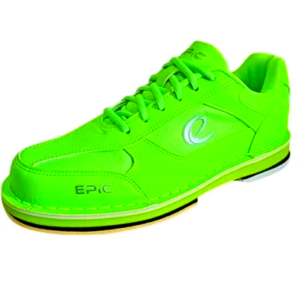
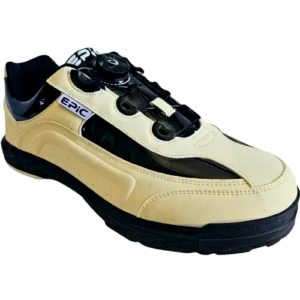
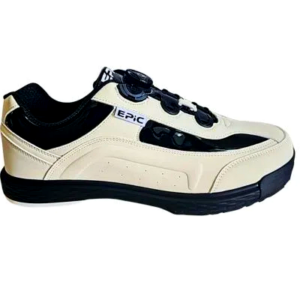
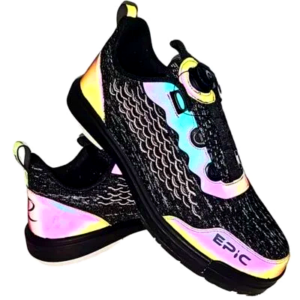
| Epic | Ares, Evo2D | Interchangeable pads | Newer brand offering performance shoes with interchangeable sole systems at competitive prices. |
Compatibility Warning: Always confirm that replacement soles and heels are compatible with your specific shoe model before purchasing. Dexter SST soles will not fit Dexter T·H·E shoes, and vice versa. Check the product listing or the manufacturer’s compatibility chart to be sure.
How to Fit and Trim Replacement Soles
Most replacement slide soles are sold as one-size-fits-all and are designed to be trimmed to match your shoe. The process is simple and takes just a couple of minutes.
Trimming Steps
Step 1: Remove the existing sole from your shoe.
Step 2: Place your shoe on top of the new sole and trace around it with a marker.
Step 3: Using a sharp pair of scissors, carefully cut along the traced line.
Step 4: Test the fit by attaching the trimmed sole to your shoe. Trim any excess material for a clean edge.
Exception: Dexter THE 9 Series
The Dexter THE 9 and C9 feature a patented symmetrical sole design. Their T·H·E soles fit both left and right shoes without trimming, making swaps even faster. The sole shape is the same on both sides, so you can move your slide sole to either foot depending on which hand you bowl with.
For a step-by-step walkthrough, see our guide: How to Change Soles & Heels on Your Bowling Shoes Like a Pro.
Care and Maintenance Tips
Taking care of your soles and heels keeps them performing consistently and extends their lifespan. A few simple habits make a big difference.
Regular Cleaning
Use a wire shoe brush to scrub your slide soles before and after each session. This removes built-up dust, oil, and debris that alter slide performance. A clean sole behaves predictably — a dirty sole does not.
Protect Your Soles
Wear shoe covers every time you leave the approach area. Walking on carpet, tile, or concrete picks up grit and moisture that immediately affects your slide. Keep extra shoe covers in your bag so you always have a clean pair handy.
Inspect for Wear
Check your soles and heels regularly for wear patterns. A slide sole that has worn smooth in the center or developed uneven spots will give you inconsistent results. Most soles last several months with regular use, but heavy bowlers may need to replace them more frequently.
Storage
Store spare soles in a clean, dry compartment of your bowling bag. Some bowlers keep them in a small ziplock bag or the shoe compartment to prevent contamination. Label each sole with its number so you can grab the right one quickly during league or tournament play.
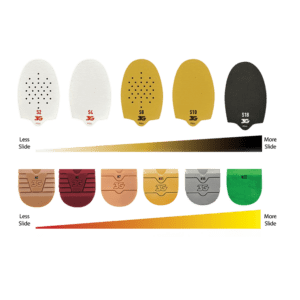
Dexter Sole and Heel Visual Guide
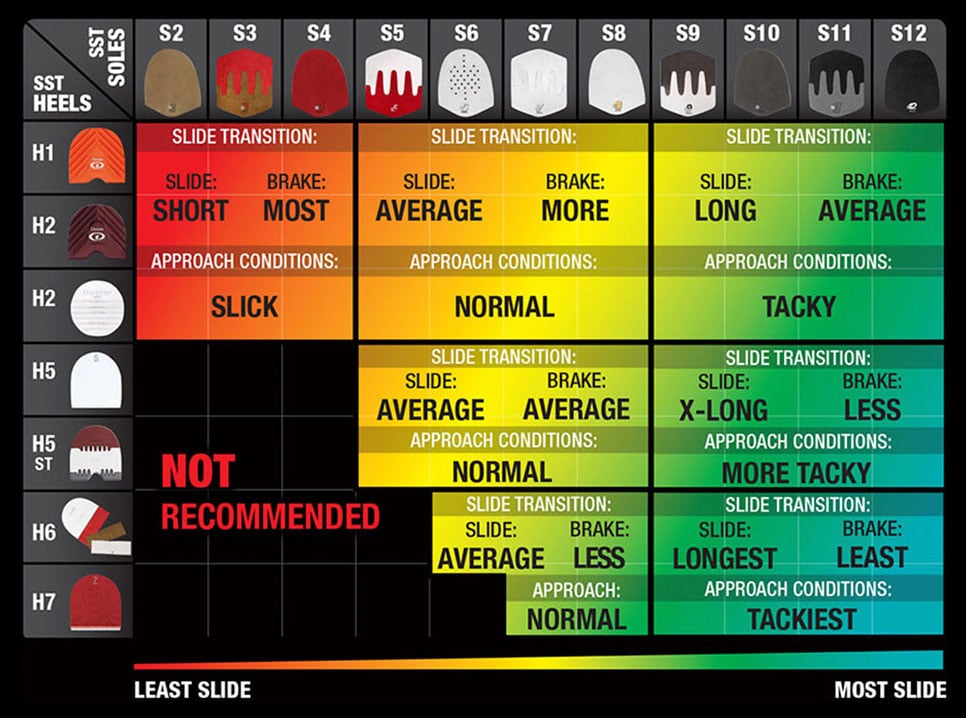
Image: The Dexter sole and heel lineup showing the complete numbering scale from low slide (S2) to maximum slide (S10+). Source: Dexter Bowling
Performance Shoes vs. Athletic Bowling Shoes: Why Interchangeable Soles Matter
Athletic-style bowling shoes (also called “universal” shoes) have fixed soles on both feet — typically a basic microfiber slide material that cannot be removed or swapped. They work fine for casual bowling, but the slide you get is the slide you are stuck with, regardless of the conditions.
Performance shoes with interchangeable soles give you a fundamentally different experience. You can adjust your slide before, during, or between games. If you bowl at multiple centers, travel for tournaments, or simply want more consistency, the upgrade to interchangeable soles is one of the highest-value investments you can make in your game.
| Feature | Athletic Shoes | Performance Shoes |
|---|---|---|
| Slide Soles | Fixed (non-removable) | Interchangeable (multiple options) |
| Brake Heels | Fixed | Interchangeable |
| Adapt to Conditions | No | Yes — swap soles and heels in minutes |
| Longevity | Replace entire shoe when sole wears out | Replace just the worn pad for a fraction of the cost |
| Hand Convertibility | Some models (universal slide both feet) | Full left/right conversion |
| Price Range | $40 – $80 | $100 – $250+ |
The cost difference is real, but performance shoes last significantly longer because you replace individual components instead of the entire shoe. Over time, performance shoes actually cost less per session than athletic shoes for regular bowlers.
Shop Interchangeable Sole Bowling Shoes






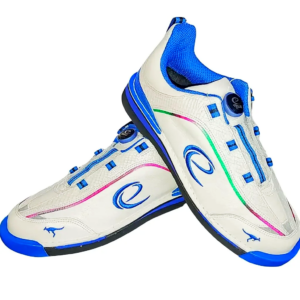
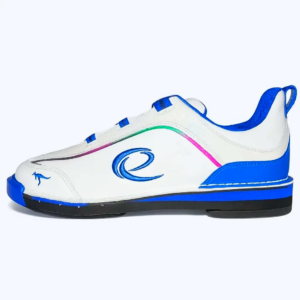
Shop Replacement Soles and Heels



Frequently Asked Questions About Bowling Shoe Soles and Heels
Bowling Shoe Soles and Heel FAQs
Start with the default sole and heel that came with your shoes — typically a mid-range slide sole (S6–S8) and a standard rubber brake heel (H5). Bowl several sessions to get comfortable, then adjust up or down based on whether you want more or less slide. Most bowlers find the stock setup works well for standard league conditions.
Most bowlers do well with three to five slide sole options and two heel choices. A practical setup covers low slide (S4), medium slide (S6–S8), and high slide (S10), plus a rubber heel (H5) and a leather heel (H7). This gives you enough range to handle any approach condition without overloading your bag.
No. Soles and heels are designed for specific shoe brands and models. Dexter SST soles fit Dexter SST shoes only, and Dexter T·H·E soles fit only the THE 9 and C9. Brunswick and 3G have their own sole systems. Always check the product listing for compatibility with your specific shoe before purchasing replacement pads.
There is no universal timeline — it depends on how often you bowl and how aggressively you slide. Inspect your soles regularly for smooth spots, thinning material, or uneven wear. When the sole no longer provides consistent slide, it is time for a replacement. Most league bowlers replace slide soles every three to six months with regular use.
Several things can cause sticking. The approach surface may be tacky due to humidity or poor maintenance. Your sole might be dirty or contaminated from walking off the approach without shoe covers. Your default sole might just be too low of a slide number for that particular center. Try cleaning your sole with a wire brush first — if the problem continues, switch to a higher-numbered slide sole.
For major slide changes, start with the slide sole. For minor fine-tuning, try changing just the brake heel first. A heel swap is quicker and can provide enough adjustment without a full sole change. For example, switching from a rubber H5 heel to a leather H7 can add a little more glide to the end of your slide without affecting the initial slide distance.
Most replacement soles are sold as oversized, one-size-fits-all pads designed to be trimmed to your shoe size. Simply trace your shoe on the sole with a marker and cut along the line with scissors. The notable exception is Dexter’s T·H·E Technology soles (for THE 9 and C9 shoes), which feature a symmetrical design that fits both left and right shoes without trimming.
Every bowling center has different approach surfaces, maintenance routines, and environmental conditions. Older wood approaches tend to be tackier than newer synthetic surfaces. Humidity levels, air conditioning, and even the building’s ventilation all affect the approach. This is one of the biggest reasons tournament bowlers carry multiple soles — a quick swap lets you adapt without changing your footwork.
The Bottom Line
Your bowling shoes are not just something you put on your feet — they are a performance tool with real adjustability built in. Understanding how soles and heels work, how the number system functions, and when to make changes gives you an advantage that many bowlers overlook. Even a small adjustment to your slide can make the difference between a clean shot and a pulled release.
Start with the setup that came with your shoes, pay attention to how your slide feels, and build your sole and heel collection gradually based on the conditions you encounter most often. And no matter what setup you choose, keep your soles clean and wear your shoe covers — that is the single best thing you can do for consistent performance.
Earn Points on Your Shoe and Accessory Purchases
Join our Striking Rewards loyalty program and earn points on every order — including soles, heels, and shoe accessories. It is free to join and the points add up fast.
🚚 Always Free Shipping
No minimum purchase. No hidden fees.
↩️ 60-Day Returns
Return it hassle-free.
⭐ Earn Striking Rewards
Earn points on this purchase. Join free today.




 Balls
Balls Shoes
Shoes Bags
Bags Accessories
 Apparel
 Deals
Deals
Can I cut a Dexter S10 to fit my Epic shoe with replaceable slide sole?