










Bowling How To's & Coaching Tips, Bowling Tips & Coaching Articles, Intermediate Bowling Tips
The Physics Behind a Perfect Bowling Strike
The Physics Behind a Perfect Bowling Strike
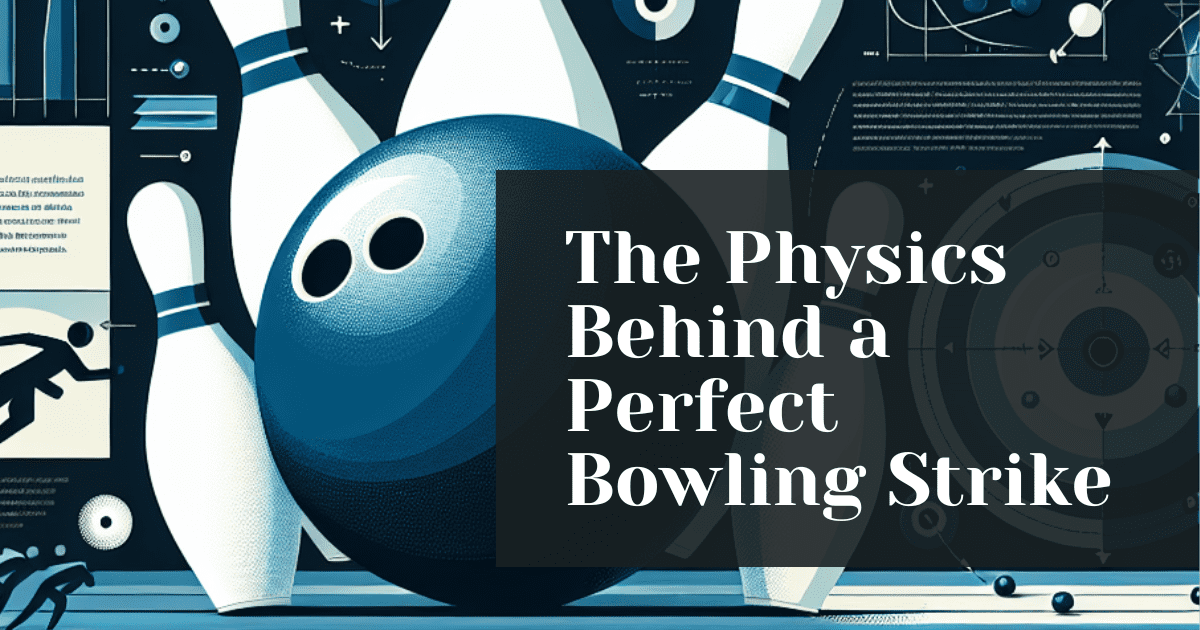
Bowling may seem like a simple game of knocking down pins, but beneath its surface lies a fascinating world of physics. Achieving a perfect bowling strike involves understanding and applying scientific principles such as force, momentum, and angle of impact. In this article, we dive into the physics behind a perfect strike, exploring aspects like ball speed, spin, and lane conditions. By understanding these elements, you can refine your technique and improve your game.
Understanding Bowling Physics
At its core, bowling physics revolves around the transfer of energy from the ball to the pins. To achieve a perfect strike, a bowler must precisely control this energy transfer, which involves several key factors.
Force and Momentum
Force and momentum are central to the dynamics of a bowling ball. The force applied by the bowler determines the ball’s speed as it travels down the lane. This speed, combined with the ball’s mass, creates momentum, which is pivotal in achieving a strike. According to Newton’s second law of motion, the force exerted on an object is equal to its mass multiplied by acceleration. In bowling, the greater the momentum (mass x velocity) of the ball, the more forceful the impact with the pins.
Angle of Impact
The angle at which the ball hits the pins is crucial for a strike. The ideal angle is often referred to as the “pocket hit.” For right-handed bowlers, this involves hitting the 1-3 pocket (the space between the first and third pins), while for left-handed bowlers, it’s the 1-2 pocket. Striking the pocket at the right angle increases the likelihood of transferring momentum effectively to all pins, leading to a strike. Typically, an entry angle of about 6 degrees is optimal for maximizing pin action.
The Role of Ball Speed and Spin
Ball speed and spin are essential components in the physics of bowling. These factors influence how the ball interacts with the lane and the pins.
Ball Speed
The speed at which the ball travels down the lane affects its kinetic energy and momentum. A faster ball can generate more momentum, which is beneficial for pin action. However, excessive speed can reduce the ball’s ability to hook properly, diminishing accuracy. Therefore, finding the perfect balance in ball speed is key to achieving a strike.
Spin and Hook
Spin, or the ball’s rotation, generates what is known as a hook. This hook is vital for positioning the ball into the pocket at the right angle. The amount of spin depends on the bowler’s release technique and the ball’s surface friction. A ball with the right amount of spin can curve into the pocket, enhancing the probability of a strike. The interplay between spin and lane conditions determines the ball’s path, making it crucial for bowlers to adjust their technique accordingly.
Lane Conditions and Their Impact
Lane conditions, including oil patterns and surface texture, play a significant role in bowling physics. These conditions can alter how the ball behaves as it travels towards the pins.
Oil Patterns
Bowling lanes are coated with oil to protect the surface and influence the ball’s motion. The oil pattern determines the amount of friction between the ball and the lane. A heavily oiled lane reduces friction, causing the ball to slide more, whereas a dry lane increases friction, enhancing the ball’s hook. Understanding the oil pattern allows bowlers to adjust their approach, ball speed, and spin to optimize their shot.
Surface Texture
The texture of the lane can also affect the ball’s trajectory. Variations in surface can lead to inconsistencies in ball movement. Bowlers must assess these differences and modify their strategy to maintain accuracy and control.
Conclusion: Mastering the Art of a Perfect Strike
Achieving a perfect bowling strike is both an art and a science. By understanding the physics behind the game, bowlers can enhance their technique, making informed adjustments to their speed, spin, and angle of impact based on lane conditions. Mastery of these elements can elevate a bowler’s game, transforming an enjoyable pastime into a display of skill and precision. Whether you’re a casual player or a serious competitor, embracing the science of bowling physics can lead to more strikes and a deeper appreciation of the sport.
Recommended Bowling gear



more bowling articles you may enjoy

Rookie Brandon Bonta Rolls 300 to Win PBA Players Championship 2026
📋 Quick Facts: 2026 PBA Players Championship | Stepladder Finals at the International Training and [...]
Feb

How Often & How Should I Clean My Bowling Ball?
How Often Should I Clean My Bowling Ball? Bowling balls are precision tools, and like [...]
Feb

Brunswick Drops 5 New Bowling Balls for 2026: Complete Specs, Reviews & Comparisons
By BowlersMart Staff | Published February 16, 2026 | Updated February 19, 2026 Brunswick’s family [...]
Feb

4 New Storm Bowling Balls for Spring 2026: Full Guide
Storm Products Inc. just loaded up bowlers’ bags for the spring 2026 season. Four new [...]
1 Comments
Feb

SWAG Just Released 6 New Performance Bowling Balls
SWAG Bowling released six new bowling balls on February 17, 2026: the Judgement Hybrid ($184.95), [...]
Feb


16 New Bowling Balls Available in 2026
*Last Updated March 14, 2026 | Updated Monthly with New Releases Thirty-one new bowling balls [...]
3 Comments
Jan

Roto Grip Transformer Review & Analysis Guide
Discover the Roto Grip Transformer bowling ball with its revolutionary Morph-Wing Core. Learn about specs, [...]
Jan


 Balls
Balls Shoes
Shoes Bags
Bags Accessories
 Apparel
 Deals
Deals