










Bowling Tips & Coaching Articles, Intermediate Bowling Tips
The Science Behind Bowling a Perfect Strike

The Science Behind Bowling a Perfect Strike
Bowling is more than just a fun pastime; it’s a sport steeped in physics, precision, and strategy.
From calculating the ideal trajectory to understanding the subtle impact of lane conditions, bowling a strike is a blend of art and science.
Researchers from MIT and Princeton have developed a mathematical model to determine the optimal way to bowl a strike. Here’s how their findings could revolutionize the game and elevate your skills.
Scientific Breakthrough: While the average bowler only has a 1-in-11,500 chance of rolling a perfect 300 game, achieving consistent success requires more than guesswork. Science has stepped in to bridge these gaps with mathematical precision.
Why Bowling a Strike is Trickier Than It Looks
A strike isn’t just about hitting all 10 pins; it’s about doing so in a way that maximizes your odds of success.
Professional bowlers make it look easy, but there’s a complex series of variables at play.
Key Variables That Affect Your Strike
Ball Angle: The precise trajectory needed to hit the pocket at the optimal angle
Ball Spin: The rotation that affects how the ball reacts upon pin contact
Lane Oil: Oil patterns that change ball friction and stability throughout the game
Pin Placement: Slight variations in pin positioning that can influence pin action
Until now, bowling strategies mainly relied on analyzing professional players’ techniques. While statistically helpful, this approach lacked deeper insights into the physics between the ball, the lane, and the pins.
Mathematical Precision Meets Bowling Strategy
A breakthrough study published in AIP Advances introduced a new system of differential equations that analyzes the most optimal ball placement and trajectory for a strike.
This research deploys Euler’s formula, a renowned mathematical equation often used in physics and engineering.
What the Mathematical Model Considers
Ball Trajectory: The exact path the bowling ball needs to take to hit the pins at the right angle
Human Error: Adjusting for slight inaccuracies in aim or spin to create a “miss room”
Lane Conditions: How the oil pattern on a lane alters ball friction and stability
This advanced modeling goes beyond traditional practices, incorporating real-world factors in a way that’s practical for bowlers of all levels.
Understanding Lane Oil Patterns and Real-World Challenges
Lane Oil Patterns and What They Mean for Your Game
A bowling lane may look smooth, but the oil applied to its surface changes everything.
Originally spread evenly, this oil shifts and spreads as games progress, creating friction zones that are anything but predictable.
Strategic Advantage: Experienced bowlers often rely on gut instinct to adjust to these changes, but the mathematical model offers a more calculated approach. By understanding how oil impacts ball motion, players can make strategic decisions about targeting specific areas of the lane.
Adjusting for Real-World Challenges
Bowling isn’t played in a vacuum, and variables like asymmetries in the ball’s surface or inconsistencies in pin placement can add further challenges.
Practical Solutions: The researchers accounted for these real-life imperfections, ensuring their equations provide practical solutions
Universal Application: Whether you’re a casual player or a professional, this data is designed to fine-tune your strategy instead of aiming for perfection in an imperfect world
How This Research Impacts the Bowling Industry
The implications of this research extend far beyond individual games.
For casual bowlers, the advice remains simple but powerful: practice consistently, keep an eye on how your ball reacts to the lane, and don’t be discouraged if you don’t get it right every time.
Industry Applications
Equipment Manufacturers
Could use these formulas to design better-performing bowling balls optimized for consistency and control
Coaches & Training
Might adopt this data to implement smarter practice routines for players at all skill levels
Professional Competition
Competitors could use this knowledge to gain an edge, particularly on unpredictable lane conditions
Everyone’s throwing style is unique, and with time, you can find your sweet spot using these scientific principles as your guide.
Practical Tips for Bowling a Better Strike
While you may not need to memorize complex equations, this research offers several actionable takeaways bowlers can use right now.
Science-Based Strike Strategies
Target the Pocket: Aim to hit the gap between the 1 and 3 pins for right-handers, or the 1 and 2 pins for left-handers. This angle gives you the best chance of knocking over all 10 pins
Adjust for Lane Oil: The location and condition of the oil significantly impact ball motion. If your ball veers too far left or right, try targeting a different area of the lane
Strategic Ball Weight: The weight of your ball can affect its momentum and how it interacts with the pins. Experiment to find what works best for you
Focus on Rotation: A slight spin, or hook, increases your chance of a strike by improving the angle at which the ball hits the pins
Practice with Intent: Use small adjustments, like changing your stance or release point, to refine your form over time
💡 Pro Tip: The key is combining these scientific insights with consistent practice. Small, intentional adjustments based on how your ball reacts to lane conditions will yield better results than random changes.
The Power of Practice Meets the Precision of Physics
Bowling may not seem like rocket science, but as this research shows, it certainly has a scientific foundation.
Whether you’re aiming for fun or a perfect 300, understanding the mechanics behind the game can give you an edge.
By combining modern physics with a dedication to practice, the elusive strike might become a little more achievable for all of us. Take what you’ve learned to the lanes, and remember to enjoy the process. After all, bowling is as much about having fun as it is about chasing that next strike.
Happy rolling! 🎳
recommended Bowling gear


more bowling articles you may enjoy
Storm Belmo Rocket AI: Jason Belmonte Debuts Mystery Ball at PBA Ohio Classic
By BowlersMart Staff · Published March 31, 2026 · Updated: March 31, 2026 Jason Belmonte [...]
1 Comments
Mar
Rookie Brandon Bonta Rolls 300 to Win PBA Players Championship 2026
📋 Quick Facts: 2026 PBA Players Championship | Stepladder Finals at the International Training and [...]
Feb
How Often & How Should I Clean My Bowling Ball?
How Often Should I Clean My Bowling Ball? Bowling balls are precision tools, and like [...]
Feb
Brunswick Drops 5 New Bowling Balls for 2026: Complete Specs, Reviews & Comparisons
By BowlersMart Staff | Published February 16, 2026 | Updated February 19, 2026 Brunswick’s family [...]
Feb

4 New Storm Bowling Balls for Spring 2026: Full Guide
Storm Products Inc. just loaded up bowlers’ bags for the spring 2026 season. Four new [...]
1 Comments
Feb

SWAG Just Released 6 New Performance Bowling Balls
SWAG Bowling released six new bowling balls on February 17, 2026: the Judgement Hybrid ($184.95), [...]
Feb

16 New Bowling Balls Available in 2026
*Last Updated March 14, 2026 | Updated Monthly with New Releases Thirty-one new bowling balls [...]
3 Comments
Jan

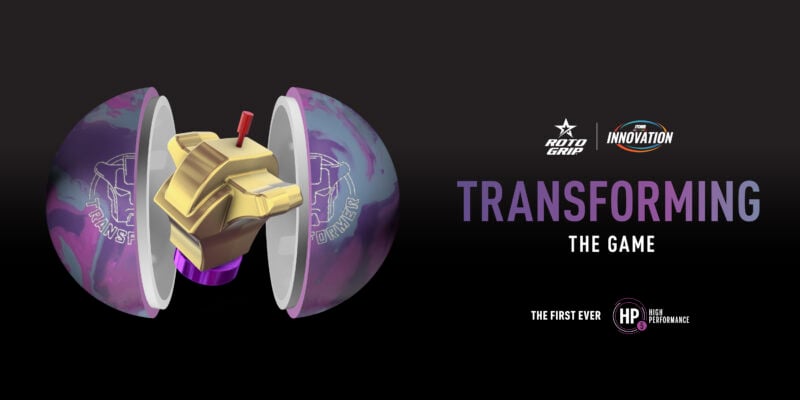
Roto Grip Transformer Review & Analysis Guide
Discover the Roto Grip Transformer bowling ball with its revolutionary Morph-Wing Core. Learn about specs, [...]
Jan

 Balls
Balls Shoes
Shoes Bags
Bags Accessories
 Apparel
 Deals
Deals
How do I equate the front of the lane with the back end with my practice routines ?
I’m always trying to learn. So I ‘m asking a question about front to back in learning what to target