













UNDERSTANDING OIL PATTERNS
Understanding Oil Patterns
Read pattern graphs, the Rule of 31, house vs sport shots, conditioner types. Master the invisible opponent.
By the BowlersMart Tournament Team. Last reviewed May 17, 2026.
QUICK FACTS
When: Essential Knowledge
Where: Lane Conditions
What Is Lane Oil?
Every bowling lane is coated with a thin layer of oil, also called lane conditioner. This invisible coating serves two purposes: it protects the lane surface from damage and it controls how your bowling ball reacts as it travels toward the pins.
Without oil, your bowling ball would grip the lane immediately after release, hooking so aggressively that consistent pocket hits would be nearly impossible. The oil creates a buffer that allows your ball to skid before it transitions into its hook phase.
🎯 Key Insight
Oil isn’t spread evenly across the lane. The specific placement of oil, where it’s heavy, where it’s light, and how far down the lane it extends, creates what we call an “oil pattern.” Understanding these patterns is one of the most important skills a competitive bowler can develop.
Modern bowling centers use computerized lane machines to apply oil in precise patterns. These machines can control exactly how much oil goes on each board and at what distance, creating conditions that range from forgiving recreational shots to demanding tournament conditions.
Why Oil Patterns Matter
Have you ever had a night where your ball seemed to have a mind of its own? One game you’re striking consistently, and the next your ball is flying through the nose or sliding past the pocket. The culprit is almost always the oil pattern, and understanding it is the key to consistency.
Oil patterns affect three critical aspects of your game:
Where You Stand
Different patterns require you to play different parts of the lane. Short patterns push you outside; long patterns force you inside.
Ball Selection
Heavy oil demands aggressive coverstocks. Lighter conditions call for weaker equipment that won’t over-hook.
Your Adjustments
As oil breaks down during play, knowing the pattern helps you anticipate when and how to move.
Professional bowlers spend as much time studying oil patterns as they do practicing their physical game. The ability to read lane conditions and adjust quickly separates good bowlers from great ones.
How to Read an Oil Pattern Graph
At tournaments and sport leagues, you’ll often see a pattern sheet (also called a lane graph or program sheet) posted. This document tells you exactly how the oil was applied. Here’s how to decode it:
The Visual Graph
The right side of most pattern sheets shows a color-coded overhead view of the lane. Think of it as looking down at the lane from above, with the foul line at the bottom and the pins at the top.
Reading the Colors:
• Darkest areas = Highest concentration of oil (most skid, least hook)
• Medium areas = Moderate oil (transitional zones)
• Lightest/white areas = Little to no oil (friction zone, ball will hook)
Forward vs. Reverse Oil:
• Forward oil = Applied as the machine moves toward the pins (creates pattern shape)
• Reverse oil = Applied as the machine returns to the foul line (adds volume to heads)
• Buff zone = Where the machine stops spraying but continues rolling out remaining oil
Key Numbers to Find
Before throwing a single ball, locate these numbers on the pattern sheet:
1. Pattern Distance (Length), How far down the lane the oil extends. This is the single most important number. You’ll typically see something like “41 feet” at the top of the sheet.
2. Volume Oil Total, The total amount of oil applied, measured in milliliters (mL). House shots typically use 18-24 mL; sport shots often use 25-30+ mL.
3. Oil Ratio, The relationship between oil in the middle of the lane vs. the outside. A 10:1 ratio is forgiving; 3:1 or less is challenging.
4. Board Range, Shows which boards are oiled. “Board 2 to Board 2” means oil covers from the 2nd board on the left to the 2nd board on the right (nearly gutter to gutter).
The 4 Key Variables of Oil Patterns
Every oil pattern can be understood through four main variables. Master these concepts and you’ll be able to quickly assess any lane condition:
1. Pattern Length
Short (under 36 feet): Play the outside of the lane, closer to the gutter. Ball hooks early and aggressively.
Medium (37-42 feet): Multiple angles work. Most versatile conditions for different styles.
Long (43+ feet): Play deeper inside. Ball must travel farther before finding friction to hook.
2. Oil Volume
Light volume (under 20 mL): Use weaker balls with polished surfaces. Too much hook is the enemy.
Medium volume (20-25 mL): Standard tournament conditions. Balanced equipment choices.
Heavy volume (25+ mL): Bring aggressive coverstocks with strong cores. You need power to cut through the oil.
3. Side-to-Side Ratio
This compares oil volume in the middle vs. outside of the lane.
High ratio (8:1 to 10:1): Very forgiving. Miss right and the ball hooks back; miss left and the oil holds it. This is your typical house shot.
Low ratio (3:1 or less): Demanding conditions. Miss by two boards and you’re in trouble. This is sport bowling.
4. Lengthwise Taper
This describes how oil is distributed from front to back.
High taper: More oil near the foul line, less at the end. Ball gets into roll earlier. Pattern breaks down more predictably.
Low taper: Even oil distribution front to back. Ball skids longer. Higher risk of carrydown problems late in competition.
The Rule of 31: Your Starting Point Formula
The Rule of 31 is the most widely used formula for determining where your ball should exit the oil pattern and begin hooking toward the pocket. It’s simple, effective, and gives you a starting point on any condition.
The Formula
Pattern Length − 31 = Breakpoint Board
Example: 41-foot pattern
41 − 31 = 10
Your ball should be around the 10 board when it exits the pattern and starts hooking toward the pocket.
Practical Applications
Short Pattern: 35 feet
35 − 31 = 4 board
Play close to the gutter. Your ball needs to be outside to have room to hook back.
Medium Pattern: 40 feet
40 − 31 = 9 board
Classic breakpoint area. Multiple angles work from the track area.
Long Pattern: 45 feet
45 − 31 = 14 board
Play deep inside. The ball must travel farther before it can hook.
⚠️ Important Note
The Rule of 31 is a starting point, not gospel. Your rev rate, ball speed, ball choice, and the specific shape of the pattern all influence where you’ll actually play. Use it to get lined up quickly, then let your ball motion guide your adjustments.
House Shot vs. Sport Shot: Know the Difference
The biggest misconception in bowling is that “I average 220, I could compete with the pros.” The difference between house conditions and sport conditions is dramatic, and understanding it will transform how you approach the game.
House Shot (Typical House Shot/THS)
Oil Ratio: 8:1 to 10:1
Volume: 18-24 mL
Length: 38-42 feet typically
Outside Loads: 2-3
What it means:
Heavy oil in the middle, very light oil outside. Creates a “funnel effect” that guides your ball back to the pocket.
Miss right? The dry boards hook the ball back.
Miss left? The oil holds the ball and prevents over-hook.
Margin of error: 5+ boards
Sport Shot (Tournament Conditions)
Oil Ratio: 3:1 or less (USBC Sport compliant)
Volume: 25-30+ mL
Length: Varies widely (32-53 feet)
Outside Loads: 5-6+
What it means:
Oil is distributed more evenly across the lane. No built-in forgiveness.
Miss right? The ball hooks the same amount, right into the gutter.
Miss left? The ball hooks the same, through the nose or Brooklyn.
Margin of error: 1-2 boards
💡 Why This Matters
A bowler who averages 220 on house conditions might average 180-190 on sport conditions. The USBC Open Championships, Junior Gold, and USBC Masters all use sport-compliant patterns. If you’re preparing for these events, practice on challenging conditions, not just your house shot.
PBA Animal Patterns Explained
The PBA’s “Animal Patterns” are the foundation of professional and sport bowling. Originally five patterns, the system has expanded to include additional challenges. Here’s what you need to know about each:
The Original Five
🐆 Cheetah (33 feet), Short Pattern
The shortest PBA pattern. Requires playing close to the gutter with precise targeting. Ball hooks early and aggressively. Considered low-to-medium scoring. Players with lower rev rates often struggle as there’s limited room to miss outside.
🦎 Chameleon (39 feet), Medium Pattern
Named for its “Christmas tree” layered shape. Heavy oil volume demands a direct line to the pocket. One of the most challenging patterns. Versatility is key, you may need to change your look multiple times as the pattern breaks down. Low-to-medium scoring.
🦂 Scorpion (42 feet), Medium-Long Pattern
Heavy oil volume with a flat shape. The ball must power through significant oil before finding friction. Demands strong equipment and good speed control. Named because “it will sting you.” Low-to-medium scoring potential.
🐍 Viper (36 feet), Short-Medium Pattern
Unique shape with heavy oil boards 7-to-7 in the heads, light oil outside from 10-30 feet, then heavy oil again from 30-37 feet. The “bite” comes from the transition zones. Requires precise breakpoint control.
🦈 Shark (45-48 feet), Long Pattern
The longest original animal pattern. Lighter oil in the middle with heavier application toward the outside, the reverse of most patterns. Forces players deep inside. Medium-to-high scoring potential for those who can play the correct angles.
Additional Animal Patterns
🐻 Bear (40-41 feet)
Flat 1:1 ratio. Considered one of the most difficult tests in professional bowling. No margin for error in any direction.
🐺 Wolf (32 feet)
Ultra-short pattern. Even more demanding than Cheetah. Players must be extremely precise playing deep outside angles.
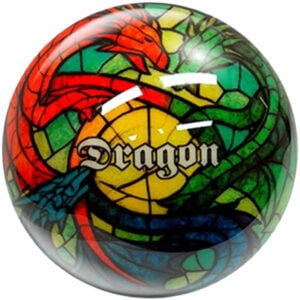
🐉 Dragon (45 feet)
Long pattern with unique shape characteristics. Tests a player’s ability to create angle on heavy oil conditions.
Understanding Lane Transition
Oil patterns don’t stay the same throughout a session. Every ball thrown changes the condition slightly. Understanding how lanes “transition” or “break down” is crucial for maintaining scoring pace.
What Happens During Play
Oil Depletion (Burn): As balls roll through the oil, they absorb and remove oil from the lane surface. High-traffic areas, typically around boards 8-15, lose oil fastest. This creates more friction in those zones, causing balls to hook earlier.
Carrydown: The oil that balls pick up doesn’t disappear, it gets deposited further down the lane, past the original pattern end point. This extends the effective oil pattern, causing balls to hook later and with less angle.
The Combination Effect: Early hook from the depleted track area meets a “push” from carrydown at the end. Your ball may hook early then lose its backend reaction, the dreaded “roll out.”
How to Adjust
Early Transition (Games 1-3):
• Move your feet and target slightly left (right-handers) to find fresh oil
• Maintain your ball choice, the pattern is just starting to open up
Mid Transition (Games 4-6):
• Continue moving left as the track burns
• Consider switching to a ball with less surface or a smoother coverstock
• Watch for carrydown affecting your backend motion
Late Transition (Games 7+):
• Play deeper inside angles or consider moving way outside to find untouched oil
• Use weaker equipment to combat early hook and carrydown
• Increase speed slightly if your ball is hooking too early
Lane Conditioner Types & Viscosity
Understanding where oil is placed is only half the equation. The type of conditioner used, and its physical properties, significantly affects how the lane plays. When you see a pattern sheet, look for the “TANKS” line to identify which conditioner is being used.
What Is Lane Conditioner?
Bowling lane oil, often called conditioner, isn’t ordinary oil. It’s a specially formulated fluid designed to protect the lane surface and influence ball reaction. Modern lane conditioners are typically mineral-based or synthetic oils engineered to resist breakdown and maintain consistent performance throughout a session.
Different centers and tournament directors choose different conditioners based on lane surface type, expected play styles, and the desired challenge level. At major USBC events, you’ll typically see Kegel conditioners, the industry standard for tournament play.
How Viscosity Affects Ball Motion
The most important property of lane conditioner is its viscosity, essentially the thickness or internal friction of the fluid. Viscosity is measured in centipoise (cps), and this number directly impacts how your ball reacts.
Higher Viscosity (Thicker Oil)
• More resistance to ball movement
• Ball tends to hook earlier
• More durable, resists breakdown longer
• Less prone to drastic lane changes
• Often called “hookier” oil
Lower Viscosity (Thinner Oil)
• Slicker, less resistance
• Ball skids farther before hooking
• May promote more carrydown
• Flows more easily through lane machines
• Often called “skid” oil
💡 Why This Matters
Viscosity isn’t just theoretical, it directly impacts your game. On thicker oil, your ball may hook earlier than expected, requiring you to adjust your line, ball choice, or ball speed. On thinner oil, the ball pushes longer before reacting. Knowing the conditioner type helps you anticipate ball reaction before you throw your first shot.
Common Tournament Conditioners
At major tournaments like the USBC Open Championships, USBC Masters, and Junior Gold, you’ll encounter Kegel conditioners. Here are the ones you’re most likely to see:
Kegel Ice (~42 cps), Slicker conditioner designed for high-friction surfaces. Ball pushes longer down the lane. Used at the 2025 USBC Masters.
Kegel Fire (~45 cps), “Hookier” conditioner for lower-friction surfaces. Ball reads earlier. Often paired with Ice for blended patterns.
Kegel Terrain (Variable), Revolutionary non-Newtonian conditioner. Viscosity changes based on force applied, high-rev players get more push, low-rev players get more traction. Adapts to different styles.
Kegel Defense-S (47.3 cps), Very durable, uses particulate solid technology. The ball carries down only the mineral oil, leaving protective particles behind. Great for high-volume centers.
Kegel Glide (38.9 cps), Predictable transitions with clean motion through the fronts. Designed for medium to high-friction surfaces.
Reading Conditioner Info on Pattern Sheets
On a Kegel pattern sheet, look for the “TANKS” line near the top. This tells you which conditioner(s) are being used:
Single Tank Example: “TANKS: ICE”, Same conditioner for entire pattern
Dual Tank Example: “TANKS: FIRE & ICE” or “TANKS: TERRAIN & ICE”, Different conditioners blended or applied to different parts of the pattern (often Fire/Terrain on forward pass, Ice on reverse)
Why Dual Tanks? Tournament directors blend conditioners to create specific playing characteristics. For example, using Terrain on the forward pass with Ice on the reverse creates durability in the track area with slickness for hold in the middle.
🎯 Pro Tip: Putting It All Together
When you see a pattern sheet, combine all the information: A 44-foot pattern (long, play inside) with 32 mL volume (heavy) using Ice conditioner (slick, ball pushes) at a 1.50:1 ratio (flat, no forgiveness) tells you this is an extremely demanding condition requiring strong equipment, precise targeting, and the expectation that your ball will travel far before reacting.
Matching Equipment to Oil Patterns
Your ball arsenal should include options for different oil conditions. Here’s a general guide for matching equipment to patterns:
Heavy Oil / Long Patterns
What you need:
• Aggressive solid or hybrid coverstocks
• High differential cores for strong backend
• Sanded surfaces (500-1000 grit)
• Strong layouts that create early roll
Ball characteristics:
Earlier hook, strong midlane read, powerful backends to cut through oil.
Medium Oil / Medium Patterns
What you need:
• Hybrid or pearl reactive coverstocks
• Medium differential cores
• Light sanded or polished surfaces
• Versatile layouts
Ball characteristics:
Balanced motion, clean through fronts, controllable backend reaction.
Light Oil / Short Patterns
What you need:
• Pearl reactive or urethane coverstocks
• Lower differential cores
• Polished surfaces (4000+ grit)
• Length-creating layouts
Ball characteristics:
Extended skid, controlled hook, smoother overall motion to prevent over-reaction.
🎯 Building Your Arsenal
A tournament-ready arsenal typically includes 4-6 balls covering the spectrum from aggressive solid reactive to polished pearl to urethane or plastic for spares. At BowlersMart, we can help you build an arsenal that covers all conditions, with free shipping on every ball.
Frequently Asked Questions
Oil Pattern Basics
Why can't I see the oil on the lane?
Lane conditioner (oil) is designed to be nearly invisible. It’s a thin, clear or lightly tinted liquid that creates a microscopic film on the lane surface. While you can sometimes see a slight sheen under certain lighting, the pattern itself is invisible during play. This is why it’s often called “the invisible opponent.”
How often are lanes oiled?
Most bowling centers oil their lanes once or twice per day, typically before league play or open bowling sessions. In tournaments, lanes are usually oiled before each squad. The freshness of the oil significantly affects how the lanes play, which is why practice sessions are so valuable.
What does 'fresh oil' vs. 'burn' mean?
Fresh oil refers to a newly applied pattern before any balls have been thrown. The pattern is at its most consistent and defined. Burn refers to lanes that have been bowled on, where oil has been removed from high-traffic areas and potentially carried down the lane. Tournaments often schedule “fresh oil” and “burn” squads to give all competitors similar experiences.
What does the 'TANKS' line mean on a pattern sheet?
The TANKS line indicates which lane conditioner is being used. Single tank patterns (like “TANKS: ICE”) use one conditioner throughout. Dual tank patterns (like “TANKS: FIRE & ICE” or “TANKS: TERRAIN & ICE”) blend two conditioners, often applying different oils on the forward and reverse passes to create specific playing characteristics. The conditioner type affects whether your ball pushes longer (thinner/slicker oil) or hooks earlier (thicker/hookier oil).
Reading & Adjusting
How do I know if the pattern is breaking down?
Watch for these signs: your ball starts hooking earlier than expected, you’re leaving more corner pins, your ball doesn’t finish as strongly at the pocket, or you’re seeing more splits. When multiple bowlers on your pair start moving left (right-handers), that’s a clear indication the track area is depleting.
Should I trust the pattern sheet or my ball motion?
Always let your ball motion be the final guide. The pattern sheet tells you what was intended, but factors like lane surface age, humidity, temperature, and how the oil was actually applied can create variations. Use the sheet as a starting point, then adjust based on what you see.
What's the difference between moving left vs. changing balls?
Moving left (for right-handers) puts your ball in fresher oil, essentially finding more pattern to work with. Changing to a weaker ball lets you stay in the same area but reduces how much your ball reacts to the increasing friction. Often you’ll do both as the session progresses, small moves early, ball changes later.
Tournament Preparation
How can I practice for sport conditions?
Ask your local center if they can lay down a sport pattern for practice. Many centers offer sport leagues that use challenging conditions. You can also practice on house shots by playing straighter lines and targeting specific boards, if you can hit your mark consistently on a house shot, you’ll have the accuracy needed for sport conditions.
How many balls should I bring to a tournament?
For major tournaments like the USBC Open Championships, most competitive bowlers bring 6-8 balls covering different conditions. At minimum, bring: 1-2 aggressive balls for fresh/heavy oil, 1-2 medium-strength balls for transition, 1 weaker ball for burned conditions, and a plastic spare ball. Some tournaments limit equipment storage, so check the rules.
Why is my average so much lower on sport patterns?
A 20-30 pin drop from house to sport conditions is completely normal. Sport patterns have a 3:1 ratio or less versus the 8:1 to 10:1 ratio of house shots. This eliminates the “funnel effect” that guides errant shots to the pocket. On sport conditions, you must hit your target consistently, there’s no built-in forgiveness.
Build your arsenal for any oil pattern. Free shipping on everything.

Bowling Balls
From aggressive solids to polished pearls
Ball Cleaners
Maintain surface performance

Surface Management
Adjust ball reaction to conditions
Bowling Bags
Carry your full tournament arsenal
Join Striking Rewards and earn points on bowling balls, cleaners, bags, and accessories. Points never expire, and membership is completely free.
TOURNAMENT PREPARATION GUIDES
USBC Open Championships
The world’s largest participatory sporting event. Complete guide to divisions, entry, and preparation.
USBC Masters
Bowling’s most prestigious major championship. Eligibility, format, and sport condition preparation.
Junior Gold Championships
The premier youth bowling championship. Everything parents and athletes need to know.
Tournament Travel Guide
Flying with bowling equipment, TSA rules, and protecting your gear on the road.

Free Shipping
No minimum. Most orders ship same day.

60-Day Returns
Easy returns on all orders.

Family-Owned
Trusted by bowlers for 20+ years.

Earn Rewards
Join Striking Rewards today.
Master any oil pattern with the right equipment. Free shipping on every order, no minimum purchase.
More Tournament Resources
HUB
All Tournament Guides
Back to the full tournament center: USBC Open, Masters, Junior Gold, and more.
RESEARCH
Drilling Layouts
Match the right layout to the tournament’s oil pattern. Dual Angle, VLS, 2LS explained.
SHOP
Tournament Essentials
Cleaners, tape, towels, travel bags. The gear tournament bowlers rely on.
READY TO COMPETE
Show up ready. Bowl your best.
Tournament-tested gear. Free shipping. 60-day returns. Trusted by tournament bowlers since 2004.
 Balls
Balls Shoes
Shoes Bags
Bags Accessories
 Apparel
 Deals
Deals