








Bowling Tips & Coaching Articles, Luke Rosdahl Bowling Ball Reviews, Luke Rosdahl The Classroom
Why Bowling Ball Rating Systems Are Inaccurate – The Classroom With Luke Rosdahl
With All Of The Variables in bowling a rating system is almost impossible

Why Bowling Ball Rating Systems Are Not Always Accurate
Hey everyone, welcome to another classroom video, today we’re going to talk about why ball rating systems or spreadsheets or formulas aren’t something you should fully trust when making purchasing decisions, mine included. Hey guess what, I’m advertising some stuff, follow the link in the description or at the end of the video, not the ads during the video, for any of your bowling needs at Bowler’s Mart, supporting them supports me, and don’t forget my code “Rosdahl10” the next time you go to order anything at Coolwick to get 10% off, they’re the ones that keep stuff like this coming. Required watching for this one is my last video, classroom #5 about lane surfaces. I’ve had a couple different rating systems, and inevitably both of them have unraveled because ball reaction simply can’t be quantified. With my current system, I try to focus less on the actual rating I give the ball and more on how that rating relates to other balls, because that’s really all you can get out of a review video. You may not get the same reaction out of a ball that Angel or I get, but the balls should relate to each other like they relate for us, and at least you can develop some kind of consistency or relationship between the reaction I get and what I say to the reaction you get. However, the more balls I rate, the more I’m like ok, this ball gets this rating, which means this ball should get this rating, but then that gives it the same rating as this other ball, which doesn’t jive. And referencing classroom #5, are we talking like West Ridge ratings or Gage ratings? If we’re talking West Ridge, the Phaze 3 gets a 6 or 7 on backend strength, if we’re talking Gage, it’s an easy 10 and I’m looking at breaking the scale. However, the Idol gets a 4 at West Ridge and probably a 7 at Gage, so it’s all relative, but not terribly accurate.
Many Factors & Variables Contribute to Bowling Ball Reaction
I have a lot of extra footage I’ve banked over the last couple years for videos that never happened for one reason or another, and fortunately I have some pretty good stuff. I’m going to show a couple different angles here with the Halo Pearl vs Halo Burn, with the same layout, same core, both pearl cover types, same surface which is the factory shine, same center, we’re on the house shot, literally the only thing different is the cover formula. The Halo Pearl has the medium strength R2S-ish etrax P18 formula and the Halo Burn which is overseas has the much stronger MicroTrax P18 formula. All the other classroom videos so far have led in this direction, we’ve talked about all the components that make up the ball and quite a few of the factors that either create or contribute to ball reaction. If you consider just core numbers in a system, it’s not accurate, if you consider just cover types, it’s not accurate, and there’s no way to really quantify cover formula strengths besides saying well this one is stronger than this one, but you can’t really measure exactly how much stronger it is, and strength is kind of a generic term that can mean different things and give you different results in different situations, so you’re left with an imperfect system no matter what. Now there’s a few exceptions you can make, but when dealing with ball reaction, you can’t really consider anything an outlier because it’s all relevant and it’s all important and there are really different things that happen in different situations. What we’re seeing here is that with all other things being equal, there’s not much difference. This pattern is about 40 feet, 21 mils, so typical house shot, and any kind of analysis would be splitting hairs. The Burn is maybe a smidge earlier and smoother, but again, trying to break this down would be pointless, they’re very similar reactions. However, remember the classroom video I made about formulas, so let’s flip the script.
All Variables Will Influence Someone’s Opinion on Bowling Ball Ratings
Now we’re on the 2019 open championships doubles and singles pattern at 42 feet and 28 mils, couple extra feet and a ton higher volume. All the sudden the Halo Pearl starts wiggling. If I keep it tight or the angles closed, it looks fine, but any kind of room or angle and it starts getting long and slow slash late. Covering boards on a house shot isn’t hook, and if you rank your equipment that way, you’re gonna be really surprised if you ever go bowl nationals or start getting into PBA regionals or really just start bowling on anything but house shots. A Rubicon for example will “outhook” a Proton PhysiX on a house shot, but if you need actual traction and dig on heavier conditions, the Rubicon is going to fall off and the Proton is going to be a champ. I’ve got quite a bit of experience in the materials testing world, and if you want to increase consistency and keep the standard deviation as low as possible, you need to control the variables as much as possible. Perhaps more importantly however, you need to understand the effect that certain variables have on the overall results. Beyond that, you most certainly can’t write off or dismiss the effect that different COMPONENTS or ingredients basically in what you’re testing have on the results, that’s the whole point of testing most things in the first place, change the makeup of the object you’re testing and see what happens. Bowling has an infinite number of variables, but bowling balls have a very small number of components, so it’s even more critical that you consider them all and pay attention when those components change.
Different Conditions Make Some Strong Bowling Balls Look Weak & Weak Balls Look Strong
Now when we start looking at the Burn, all the sudden the stronger cover formula starts flexing. When there are lower volumes or plenty of friction to work with, everything will hook, but when you start talking about actual strength or traction, that’s when you start seeing the separation and where the rating systems start falling apart. You absolutely can’t just look at board coverage on a house shot and say this ball is stronger than this ball. It’s like taking a golf club and only looking at the length it hits the ball. Sometimes you need the height or the elevation the club provides, looking at covering boards on a house shot is the same as looking at how far the club hits the ball, that’s only half of it or not even that. Stronger stuff will start up earlier and be smoother on drier conditions because they’re built to dig through a lot more oil. When not enough oil is there, they use up too much too fast and can burn up and/or quit, so that’s what gives the illusion that weaker balls are actually stronger than strong balls on drier conditions. It’s the same with tires and racing, if you’re drag racing or on a paved asphalt track, you use smooth tires that’ll give you maximum surface area to grip the track with. If you instead used snow tires, they’d get chewed up and you’d actually be sliding all over the place. However, if you race instead on snow or dirt, all the sudden those racing slicks get zero traction and you’re sliding all over the place, and that’s when the texture and channels of snow or dirt tires offer dig and grip. Now if you just took those different kinds of tires and tested them on an asphalt track, you might come away with a really different idea about their overall strength or usefulness and how they compare to each other.
Now let’s go back to my Proton PhysiX and RST X-1 reviews. Where the Halo Pearl started out sharper and stronger on the drier house pattern and got slower and weaker on the heavier nationals pattern, both of these balls started out looking sharper on the heavier pattern and got smoother and slower on the drier pattern, but the extra volume on the heavier pattern didn’t really faze them at all. This is because once again, the Halo Pearl is built to respond to friction, while the Proton and RST are designed to create it. Once you take the friction away from weaker or sharper balls, they’re going to suffer, but if they have it to work with, they’re going to fly. Sometimes stronger balls will stay stronger than weaker stuff as the conditions get drier, but sometimes they won’t, that depends on a lot of different things, but as we can see here, these two stronger balls are actually sharper and more dynamic on the heavier volumes than they are on the lower volumes. When you go onto the website and it says the ball is designed for heavy oil, that’s what they mean or what they’re talking about. You take a driver off the tee because you’re going for length, you’re trying to get the ball to go as far as you can. Once you get closer to the green, you’re looking for more precision, you’re trying to get the ball up and then to stop where you want it to. In between that, there’s a balance and different levels of height and length, and it’s the same with bowling balls. Sometimes you want them to just flat out hook, and I mean get traction or dig, not cover boards, however sometimes you want them to do just that, cover boards and be sharp and quick. Most of the time you want something in the middle, but something you absolutely cannot do is just ignore one of those while chasing the other because you might not get what you think you’re getting. There’s times you can’t ignore how high a golf club will hit the ball in favor of how long you want to hit it or vice versa, and you can’t just compare them in one dimension because hook and friction response for bowling balls are as different as length and height for golf clubs.
Trust What Your Experience From Dealing With Invisible Factors Tell You
It’s a much easier concept to see in golf, sometimes you want to chip the ball onto the green and let it run a bit, while sometimes you want to get it up high and drop it, and you can see visually why you might need to do one or the other. However, the concept just doesn’t register for bowlers the same because the lane always looks the same regardless of the oil that’s out there, and on a house shot a lot of things tend to blend together. Now you can definitely go sideways and say hey, let’s just keep it simple, most people bowl on house shots, so if a Rubicon looks like it’s outhooking a Proton on a house shot, for all intents and purposes it IS stronger because most people are going to see hey, the Rubicon is sharper, it covers more boards, so it’s “hooking more” than the Proton, and that’s completely fair. This avoids people’s general misconceptions about ball reaction being an issue, because if someone gets an Incite because it’s supposed to be stronger than a Rubicon UC2 only to see the Incite be “lazy” while the UC2 flies, that’s very understandably confusing. However, the issue this causes is a warped, inaccurate and overly simplistic understanding of ball reaction that will only cause issues down the road because instead of learning it correctly despite the learning curve in the beginning, you start reading strength as sharpness and board coverage instead of reading strength as TRACTION and sharpness or friction response as a totally different idea, which a lot of systems out there don’t even factor in. Like, how does the Omega Crux get the same factor or adjustment or multiplier as a Hyroad Pearl does just because they’re both pearl, that’s insane. This causes your whole foundation or understanding of ball motion to fall apart, and eventually you have to start from scratch and unlearn a bunch of things you thought were true and learn it again the right way.
The Roto Grip UC2 for example has the highest friction response of any ball I’ve ever thrown. Given enough friction, it’s an absolute boomerang. However I’ve had a lot of people tell me for them it’s quite a bit smoother, and smoother than a lot of stuff like the RST X2, Phaze 3, or UFO Alert that I have ranked lower on backend strength. This takes us right back to the Halo Pearl differences from earlier, and even to my UC2 review which we’re looking at now. When I get it outside to the dry, it flies, it straight up stops and turns, however when I keep it inside in the oil, all the sudden it gets really slow and round, so if you really want to get picky, the backend rating when I hit the 5 board or outside on a house shot is an easy 10, but we’re in like 5 or 6 territory if I hit 10 board, so how is any kind of system or ranking supposed to even work when a ball can do two different things when every single possible variable is the same? Etrax is a medium strength cover that depends on friction, and when you have friction, stuff like it, the Idol Synergy and the X2 are gonna fly and look super strong, but when you take it away, all the sudden they float and wiggle like the Halo Pearl on the heavier pattern from earlier. So where does this leave us? Pretty well the same place we started, but the more mathematic people try to make bowling, the more it falls apart. You can’t punch numbers into a spreadsheet and look at the numbers on a pattern graph and create some kind of formula that spits out a result. There are zero shortcuts to ball motion, and every time you try to create one, you end up getting off track or you ignore critical information or write off significant factors as outliers or make a bunch of allowances or excuses for something that just can’t work.
The only thing that works is that you have to learn ball reaction, not create a formula to help you avoid it, it’s like giving a kid a calculator first vs teaching them how the basics of math actually work. Take the calculator away and they have no idea what they’re doing but the real issue is that they don’t understand WHY it works. If you get onto different conditions or lane surfaces that all the sudden mess with your rankings or spreadsheet, if you don’t know how to read ball reaction or understand cores, cover formulas, surfaces, and how all of it combines to create ball motion, you’re going to be lost, confused, and upset. You could argue that that stuff might get you going in the right direction, and it could be helpful to have the information at a glance to help you understand what you might be seeing, but as soon as you try to turn it into some kind of formula or rank or rating system, it’s going to take you off the rails. If you actually understand all the ball tech in the first place and develop a good eye for ball reaction, you don’t need any of that stuff anyway. I started both my ratings systems with good intents, but the reality is that they aren’t an aid, they’re a crutch, and for every person that actually uses it in the right way, there’s 99 others that lean on that crutch as hard as they can and never let it go. Thanks for watching and may the strikes be with you.
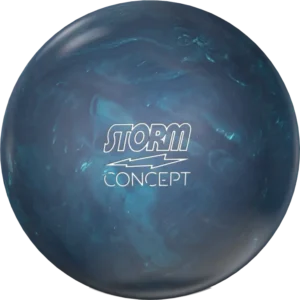
Storm Dark Code bowling ball


If you need the perfect combination of mid-lane roll and backend reactivity with head-turn pin carry, the Dark Code should be your very first choice. Easy power and a gorgeous look? Sign us up.
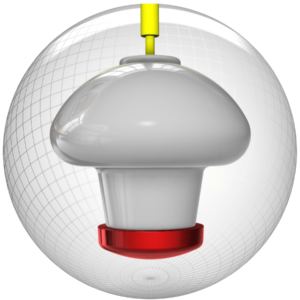
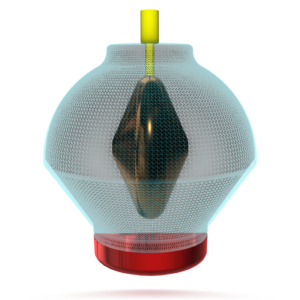
The Dark Code features an extremely dense modified disc technology shape called the RAD4 Core. First introduced in the X-Factor™ series, RAD (Radial Accelerating Disc) technology produces, bar none, more torque and entry angle than traditional asymmetrical cores. It’s the new standard for high performance.
Some bowling balls immediately sink their teeth into the lane in order to provide traction in oil. Others glide through the front part of the lane with ease, saving all their energy for an explosive backend reaction. But, what happens when you have a ball that’s capable of offering both? Well, at Storm, we wanted to find out, and that’s how we came up with the Dark Code – a ball that’s so good, it’s almost evil!
The engineering may be complicated, but the simple truth of the Dark Code is as confidence inspiring as anything else we’ve built to date. Dynamic cores and potent covers build a solid foundation – one enhanced by industry-leading longevity. A superior factory finish signifies its place atop the pecking order. Imposing. Purposeful. This is the kind of ball you look up to.
We stepped back and took the best features of our seven most popular coverstocks: Reactor™, R2S™, TX-16™, NRG™, SPEC™, GI-20™, and NeX™. What’s realized has more texture, more porosity, and more motility that combines the benefits of seven of the most iconic coverstocks to ever leave the Storm workshop. TractionX7 headlines the durability of TX-16, the backend of R2S, and the slower oil absorption rates of SPEC. Simply put, there’s versatility encased in TractionX7’s genome that stays put for as long as it stays in your bag.
Coverstock – ReX Pearl Reactive
Weight Block – RAD4™ Core
Factory Finish – 1500-grit Polished
Ball Color – Obsidian
Fragrance – Cherry Delight
RG (15lb) – 2.50
Diff (15lb) – .058
storm bowling Balls





more bowling articles you may enjoy

Swag Apex Solid Review: New Benchmark for Control
With Swag Bowling's triumphant 2025 relaunch, bowlers everywhere are rediscovering what true control feels like. [...]
Jul

Roto Grip Gremlin Review: Complete Performance Analysis
Released on July 18th, the Gremlin promises to solve a common problem: finding a ball [...]
Jul

Hammer BubbleGum Vibe Review: Pink Power & Value
Finding a bowling ball that offers legitimate performance at an affordable price feels nearly impossible. [...]
Jul

Anger Solid vs Hazmat: Hammer Bowling Ball Comparison
Finding a truly versatile bowling ball that performs well across different conditions while staying affordable [...]
Jul

Motiv Supra Clutch Review: Best Ball for Burn?
Your go-to ball starts hooking too early, your strike ball becomes unpredictable, and you’re watching [...]
Jun

Ethos Solid Review: Smooth Arc + Control = Game Changer?
As the final piece in the Ethos trilogy, this ball delivers something unique: true bridging [...]
Jun
 Balls
Balls Shoes
Shoes Bags
Bags Accessories
 Apparel
 Deals
Deals