














LEVEL 1
Beginner
Basic Bowling Tips: Build Your Foundation in 30 Days
If you are new to bowling, this is your starting point. Stance, approach, release, scoring, and the gear you actually need. Skip the gimmicks, learn what works, and build habits the next 200 games will thank you for.
Start Here
The four things that matter most when you are starting: (1) a ball that fits your hand and is light enough to control, (2) a 4-step approach with a balanced finish, (3) a follow-through that stays high, and (4) a consistent target you aim at on every shot. Everything else is layered on top of those four.
The Four Fundamentals
Every great bowler does these four things well, every time. New bowlers who get these right outscore experienced bowlers who guess.
Fundamental 1
Stance
Stand square to your target. Ball held about chest height, supported with the non-bowling hand. Shoulders relaxed, weight on the balls of your feet. Eyes locked on the arrow or board you are throwing toward.
Common fix
Most beginners stand too tall and grip the ball too tight. Lower your stance a few inches and let the non-bowling hand carry the weight.
Fundamental 2
Approach
A 4-step approach is the standard. Push-away on step one, downswing on two, backswing on three, slide and release on four. Steady tempo, no rushing, no slowing down at the end.
Common fix
Count your steps out loud the first few games. If you cannot get to four, you are starting too close to the foul line.
Fundamental 3
Release
The ball should roll off your fingers smoothly at the bottom of your swing, right around your ankle. Thumb exits first, then fingers do the work. Do not muscle it. Let gravity and the pendulum do most of the swing.
Common fix
If the ball thuds or drops behind the foul line, your thumb is sticking. Use a fitted ball or apply protection tape to smooth the release.
Fundamental 4
Follow-Through
After the ball leaves your hand, your arm should continue up toward your target. Pose the finish like a free-throw shooter. A balanced finish with your bowling hand up at eye level is the universal sign of a clean shot.
Common fix
If you wobble after release, your slide foot is in the wrong spot. Slide should finish straight, not pointing sideways.
Pick a Ball You Can Actually Control
The single biggest mistake new bowlers make is grabbing a 14 or 15 pound house ball because it “feels right” for one shot. Get it wrong and the next 9 frames are a fight.
| Your body weight | Recommended ball weight | Why |
|---|---|---|
| Under 80 lbs (kids) | 6 to 8 pounds | Light enough to swing without losing balance or hurting the shoulder. |
| 80 to 130 lbs | 10 to 12 pounds | Right around 10% of body weight, the classic guideline for adult beginners. |
| 130 to 180 lbs | 13 to 14 pounds | Most adult women and many adult men do their best work with 13 or 14. |
| 180+ lbs | 14 to 15 pounds | 15 is the regulation max. Most pros throw 15, but only after years of strength and timing. |
| Any weight, sore shoulder | Drop 2 pounds from the chart | If your arm hurts after one game, the ball is too heavy. Period. |
The “fits-your-hand” test: insert your thumb fully, then lay the ball back over your palm. Your middle and ring fingers should reach the holes with the second knuckle (conventional grip).
The 4-Step Approach, Demystified
Most house bowlers walk to the line and just throw. A repeatable 4-step rhythm is the difference between getting lucky and getting better.
1
Push-away
First step is with your bowling-side foot. As you step, push the ball forward and slightly down. This is the timing trigger for everything that follows.
2
Downswing
Second step (opposite foot), ball drops past your hip. Arm relaxed, gravity does the work. No squeezing, no lifting.
3
Backswing
Third step (bowling side again), arm swings back to about shoulder height. Higher backswing means more speed, but only as high as you can control.
4
Slide and release
Fourth step is a slide on your opposite foot. As you slide, the ball returns past your ankle and rolls off your fingers. Follow through up and toward your target.
The 4 Most Common Beginner Mistakes
Fix these and your average jumps 20 to 40 pins before you change anything else.
1
Aiming at the pins
Pros aim at the arrows, 15 feet downlane. Pins are too far to target consistently. Pick an arrow, not a pin.
2
Muscling the ball
If you are arming the ball, you are working too hard. Let the pendulum swing and your body do the speed.
3
Quitting on the shot
Stopping your arm at release kills accuracy. Finish the swing up and out toward the target every time.
4
Ball too heavy
A ball you can swing pendulum-style beats a heavy ball you have to lift. Comfort wins every time at this stage.
Scoring Basics: How It Actually Works
10 frames, two shots each (three on the last frame if you mark). Strikes and spares are bonus opportunities, not just pins.
Open Frame
No mark, just pins
You knock down some pins on shot 1, some more on shot 2. Add them up. That is your frame score.
Spare
10 plus your next shot
All 10 pins down in 2 shots. You score 10, plus the pins from your very next shot. Strike on the next ball means 20 for that frame.
Strike
10 plus your next two shots
All 10 in one shot. You score 10, plus the next two balls. Three strikes in a row, the first one is worth 30.
Quick math: A perfect game (12 strikes in a row) scores 300. A clean game (all strikes or spares, no opens) easily breaks 170. Once you stop bowling open frames, your average jumps fast.
Gear You Actually Need (And What Can Wait)
You do not need a $300 bag of gear to start. You do need a few essentials that pay off immediately.
Buy It Now
The Day-One List
- Bowling shoes. Rental shoes are slick and inconsistent. A $40 to $60 pair of starter shoes pays for itself in 5 league nights.
- A drilled house ball OR an entry-level reactive ball. Even a 10-pound polyester ball drilled to fit your hand outperforms a random 14-pound house ball.
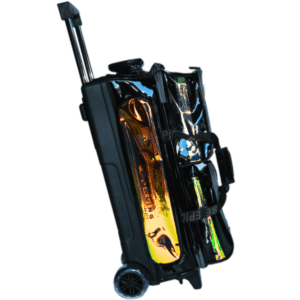
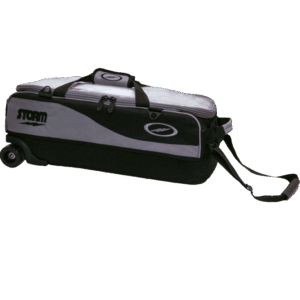
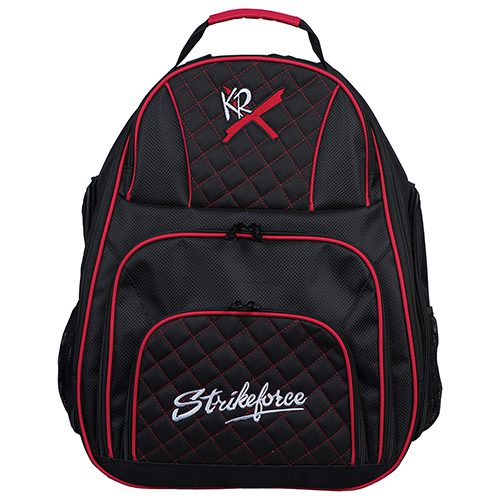
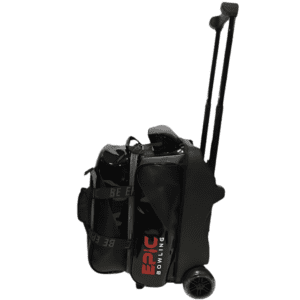
- A simple bowling bag. A 1-ball roller bag keeps your ball clean and saves your back.
- A microfiber towel. Wipe oil off the ball between every shot. Quietly the most important $5 item in the sport.
It Can Wait
Save These For Later
- A second (spare) ball. Useful once you can hit the pocket consistently, not before.
- A wrist support. Helps committed players, but masks form issues for beginners.
- Specialty tape and inserts. Once your release is consistent. Until then, plain protection tape is fine.
- Coaching apps and trackers. Helpful at the intermediate level, distracting at the beginner level.
FAQ
What is a good first-game score for a beginner?
Anywhere from 70 to 110 is normal for a first-ever game. By your fifth or sixth time bowling, most beginners reach the 100 to 130 range with a fitted ball and decent form. The single biggest jump comes from getting your own drilled ball, not from any technique change.
Should I throw a straight ball or try to hook?
Throw straight while you learn the approach. Hook comes from a fingertip-drilled reactive ball, which you should not invest in until your release is consistent. Most coaches recommend bowling straight for the first 2 to 3 months, then taking your first hook lesson once your form is repeatable.
Why do my pinky and ring finger keep getting blisters?
Almost always a fit issue. Either the ball is too heavy and you are gripping too hard, or the finger holes are slightly too big and your fingers are pulling against the edge. A pro shop can resize the holes in 15 minutes for under $20.
How often should I bowl when I am starting out?
Once a week is enough to build muscle memory. Twice a week is ideal. More than that early on can cause sore shoulders and bad habits before your form is established. Quality of practice matters far more than quantity at this stage.
Do I need a coach right away?
Not on day one. Spend a few sessions getting comfortable, then book one lesson once you have specific questions (“Why does my ball go left?”, “Why am I missing right?”). One hour with a USBC-certified coach catches form issues that take years to fix on your own.
When am I ready to move up to Intermediate?
When you can consistently bowl 130 or higher, hit the pocket on most shots, and your approach is repeatable. The Intermediate guide picks up where this one leaves off.
Level 2 Next
Ready for the Intermediate Guide?
When you can consistently break 130, hit the pocket, and feel comfortable with your release, it is time to start thinking about consistency, lane adjustments, and your first drilled ball.
Beginner-Friendly Reading
Grip Basics
Fingertip vs. Conventional Grip
Why conventional grip is the right starting point and when (if ever) to switch.
Footwear
Why Wear Bowling Shoes?
Slide control, stability, and why rental shoes hold you back from day one.
Education
Bowling Knowledge Hub
The full education library: drilling, oil, coverstocks, history, and more.
 Balls
Balls Shoes
Shoes Bags
Bags Accessories
 Apparel
 Deals
Deals