









Bowling How To's & Coaching Tips, Bowling Tips & Coaching Articles, Buying Guides, Coaching Corner with John Gaines
Creating the Simple and Effective Bowling Ball Arsenal Part 1 By John Gaines

How To Make A Great Bowling Ball Arsenal Simplified
Are you confused by all of the ways to create different bowling ball motions? Do you have bag after bag full of bowling balls, and not really know how they compare to each other? Ever been confused with which ball to go in a tournament setting (haven’t we all at some point)?
In an upcoming series of blogs, I’ll give you a solid strategy to create a simple but effective arsenal of bowling balls that will make sense to your mind and your eye, giving you the confidence to execute the shot you need when you need it.
There Are Many Different Ways To Create Different Ball Motions In Your Bag.
There’s really three different areas you’re in control of when heading to the lanes.
-
Bowling Ball Model Choices
-
Ball Layouts
-
Ball Surface
If you asked me which one of these is most important, I would immediately respond with ball surfaces. Interestingly, that’s usually the one of those three options that bowlers ignore the most.
So How Do I Go About Creating My Own Arsenal
I try to eliminate variables that cause confusion and make the bowler comfortable. The very first thing I want to get is the bowler’s favorite ball layout. Every bowler out there has a “signature” ball motion to their game. It’s the result of your combination of ball speed, revolutions, axis rotation, and axis tilt. They’re what sum up to give you your everyday ball shape on the lane. For some bowlers, such as Jason Belmonte, the bowler forces are such that he’s going to see large hook with sharp backend movement nearly every day. Chris Barnes, who is lower ball speed, revolutions, and rotation, will typically see smoother shapes that change direction slower.
I look to understand that natural ball motion of the bowler first so I can then find their “favorite layout.” You know the one. It’s that layout that you seem to be able to drill in nearly any ball and get good ball motion from. It’s the one that seems to bail you out when you’ve been searching for ball motion with different layouts and exotic drillings. Every bowler has one of these, whether you’ve found it or not. I’ll give you my personal example:
Ball Speed – 17 mph
Revolutions – 375 rpm
Axis Rotation – 40 degrees
Axis Tilt – 10 degrees
Those forces add up for me to be slightly speed dominant at times compared to my revolution rate, with a lot of forward roll and a low amount of tilt. Given some other physical attributes of my approach, I tend to prefer balls that want to get started a little sooner than most. In the past, I’ve found that I tend to prefer lower pin position balls versus higher pin position balls. I’ve also found that I prefer slightly stronger drilled pin positions than most use relative to their positive axis point. These are all things you’ll naturally learn over time when you drill some balls and begin to pick up similarities and differences. The key here is to find what seems to be the “can’t miss” layout for you. Mine looks like this:

My positive axis point is 5 ½” over by ½” up. That makes this layout 45 degrees x 4 1/2″ x 70 degrees, which places the pin just below and slightly right of my ring finger. You can see the center of gravity in this picture on the lower-right portion of the ball. I typically drill the fingers deep enough so that I can use a weight hole on my vertical axis line, 1” below the midline.
For me, I get average to strong mid-lane traction out of this layout, and the backend motion is typically smooth but continuous hooking. I rarely see the “check-mark” shape in my ball path when I use this layout.
It’s important to find that reliable layout, as we’ll be using it several times as we continue this blog series. To me, one of the easiest ways to confuse yourself on the lanes is to have 4-6 different ball layouts sitting in your bag. Bowling balls and surfaces create huge differences in ball motion by themselves. There’s no reason to complicate the issue by placing different layouts in all of your stuff as well. The bowling ball layout, while important to ball motion, is not my main focus. My goal is to find one that I like, and use ball and surface choices to build my bag.
So find that layout that seems to reliably work for you. It won’t be hard. Think about the last few balls you’ve owned. Think about the ones you’ve liked. There’s most likely some consistency there when it comes to ball layout. Once you have that, we’ll be ready to discuss our next step, finding your target core specs.
More Articles BelowClick Here For More Coaching Advice

John Gaines – From the Pro Shop to Team USA to the USBC Bowling Hall of Fame
The Iconic Lodge Lanes USBC Open Championships Bowling Team If you have ever bowled the [...]
1 Comments
May
900 Global Tour Rep Day 5 & 6 – The USBC Masters
Being The 900 Global Tour Rep Day 5 & 6 – The USBC Masters By [...]
Apr

900 Global Tour Rep Day 4 – The USBC Masters
Tour Rep USBC Masters Syracuse, NY 2018: [addthis tool=”addthis_inline_share_toolbox”] Day 4 Today is known as [...]
Apr

900 Global Tour Rep Day 3 – The USBC Masters
Global 900 Tour Rep USBC Masters Syracuse, NY 2018: [addthis tool=”addthis_inline_share_toolbox”] Day 3 Today is [...]
Apr
900 Global Tour Rep Day 2 – The USBC Masters
900 Global Tour Rep USBC Masters Syracuse, NY 2018: [addthis tool=”addthis_inline_share_toolbox”] Day 2 Today starts [...]
Apr
Tour Repping USBC Masters Day 1
Tour Rep USBC Masters Syracuse, NY 2018: Day 1 Today was practice session for A, [...]
Apr
The Coach To The Pro Bowlers In Competition – PBA Tour Rep
Tour Reps Are Another Set Of Eyes For The Pros [addthis tool=”addthis_inline_share_toolbox”] If you follow [...]
3 Comments
Apr

Better Balance at the Foul Line – By John Gaines
[addthis tool=”addthis_inline_share_toolbox”] Ways To Keep Your Balance While Bowling And Not Fall Off Your Shot [...]
1 Comments
Jun

A Simple Tip For Making The 10 Pin or 7 Pin In Bowling By John Gaines
[addthis tool=”addthis_inline_share_toolbox”] A Simple Tip For Knocking Down The 10 Pin Or 7 Pin There [...]
1 Comments
Jun

30 Days To Becoming A Better Bowler By John Gaines
30 Days Or Practicing To Improve Your Bowling Scores I know, it sounds like one [...]
4 Comments
Jun
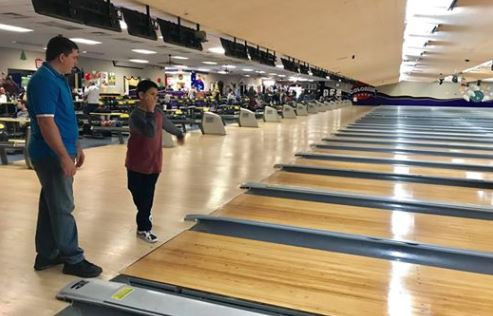
The Importance of Making Adjustments During League Bowling.
Making Adjustments During League Bowling Q&A With John Gaines BowlerSmart along with BowlersMart Merritt Island [...]
1 Comments
Nov
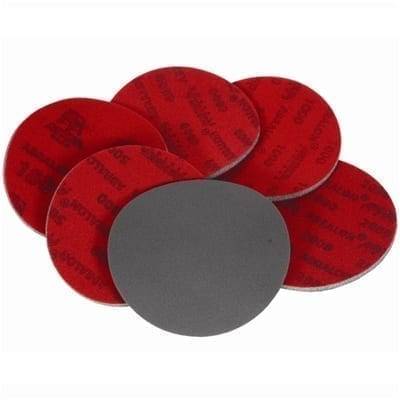
Changing Bowling Ball Surface Is The Easiest Way To Change Bowling Ball Motion By John Gaines
Bowling Ball Surface Is 70% Of The Balls Reaction Having issues hitting the pocket with [...]
Jun


How To Read An Oil Pattern When Bowling
Importance Of Knowing The Oil Pattern Before Bowling The Different Well Known Oil Patterns PBA [...]
Apr
A Great Bowling Lesson With Gerry Aquino
An Awesome Bowling Lesson With Gerry Aquino [addthis tool=”addthis_inline_share_toolbox”] Gerry is basically a new bowler. [...]
Mar

Achieve Your Bowling Goals With A Solid Practice Plan
If You Want Higher Bowling Scores Create A Practice Plan [addthis tool=”addthis_inline_share_toolbox”] Most of us [...]
2 Comments
Mar

What A Great 2 Day Bowling Camp In Las Vegas With Sean Rash
[addthis tool=”addthis_inline_share_toolbox”] Sean Rash 2 Day Bowling Camp Las Vegas Sponsored By BowlersMart – Brunswick [...]
Mar
Great Bowling Lesson With Andrew Colon By John Gaines
Todays Bowling Lesson – Working on the pushaway and spine angle [addthis tool=”addthis_inline_share_toolbox”] Andrew’s pushaway [...]
Mar

Creating the Simple and Effective Bowling Ball Arsenal Part 3 By John Gaines
[addthis tool=”addthis_inline_share_toolbox”] Part three of my blog series deals with choosing bowling balls. [...]
3 Comments
Nov
Creating the Simple and Effective Bowling Ball Arsenal Part 2 By John Gaines
[addthis tool=”addthis_inline_share_toolbox”] Part 2 On How To Create A Simple But Effective Bowling Ball Arsenal [...]
1 Comments
Oct
Creating the Simple and Effective Bowling Ball Arsenal Part 1 By John Gaines
[addthis tool=”addthis_inline_share_toolbox”] How To Make A Great Bowling Ball Arsenal Simplified Are you confused by [...]
2 Comments
Oct

Coming Back To League Bowling After A Break By John Gaines
[addthis tool=”addthis_inline_share_toolbox”] Coming Back To League Bowling After A Layoff If you took some time [...]
Sep
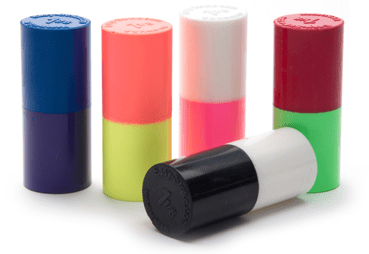
Finger Inserts & Thumb Slugs Explained
[addthis tool=”addthis_inline_share_toolbox”] Today in the Coaching Corner, we take a look at finger inserts [...]
3 Comments
Jul

The Impact of Bowling Ball Surface Adjustments
How Different Surfaces Will Make The Bowling Ball React Differently Today, we’ll visit the subject [...]
2 Comments
Jun

The Slide And Finish Position – Building Proper Bowling Technique And An Ideal Bowling Approach
[addthis tool=”addthis_inline_share_toolbox”] Last Part of a Great Approach In Bowling – The Finish Position & [...]
1 Comments
Jan


 Balls
Balls Shoes
Shoes Bags
Bags Accessories
 Apparel
 Deals
Deals
Pingback: Creating the Simple and Effective Ball Arsenal #2 - Industry Insider by Jeff Ussery - BowlersMart.com Bowling Blog
Pingback: Creating the Simple and Effective Ball Arsenal #3 - Industry Insider by Jeff Ussery - BowlersMart.com Bowling Blog