Bowling Ball Core Research Center
Discover the science behind bowling ball performance – explore core types, specifications, and find the perfect match for your game
Written by Brian Halstrom, VP of Marketing & eCommerce at BowlersMart | Reviewed by Shawn Ryan, VP of Consumer Marketing, former Storm Tour Team Staff Development Manager | Last Updated: March 2026
A bowling ball core — also called a weight block — is the internal mass inside your ball that controls how it moves on the lane. Symmetrical cores produce smooth, predictable motion and work well for most bowlers and conditions. Asymmetrical cores generate stronger, more angular reactions with higher hook potential for heavy oil and advanced play. The core determines three critical specs: RG (radius of gyration), differential, and mass bias — all regulated by the USBC. Here’s everything you need to know to choose the right core for your game.
Understanding Bowling Ball Cores: The Heart of Performance
The core (also called weight block) is the most important factor in determining how your bowling ball reacts on the lane. It affects everything from hook potential to energy retention through the pins. While coverstock determines how the ball grips the lane surface, the core determines the ball’s fundamental motion — when it revs up, how much it flares, and how it changes direction at the breakpoint.
Why Core Design Matters
Different core shapes create different ball motions. Understanding core types helps you choose equipment that matches your style, rev rate, and the lane conditions you face. The core determines three critical specifications that define ball performance — all governed by USBC Equipment Specifications:
Key Core Specifications:
RG (Radius of Gyration): How quickly your ball wants to rev up. USBC allows RG values between 2.46″ and 2.80″ for balls 13 lbs. and heavier. Lower RG = earlier roll, Higher RG = length with backend reaction.
Differential: The difference between max and min RG values — determines track flare and hook potential. USBC limits differential to a maximum of 0.060″. Higher differential = more hook potential.
Intermediate Differential / Mass Bias (Asymmetrical only): Measures the degree of asymmetry in the core. USBC requires a PSA marking when intermediate differential reaches 0.010″ or greater. Creates an imbalance that affects ball motion and expands drilling layout options.
Core Types Explained
There are two main categories of bowling ball cores, each designed for different performance characteristics and bowler types. Storm’s Core Tech research and other manufacturer R&D teams have pushed these designs forward significantly — today’s symmetrical equipment is far more advanced than the simple puck-type cores of past decades.
Core design affects every aspect of ball performance
Types of Bowling Ball Cores
Choose the right core type to match your playing style and lane conditions
SYMMETRICAL CORES
Predictable & Controlled
ASYMMETRICAL CORES
Dynamic & Angular
Symmetrical Cores: Predictable Performance
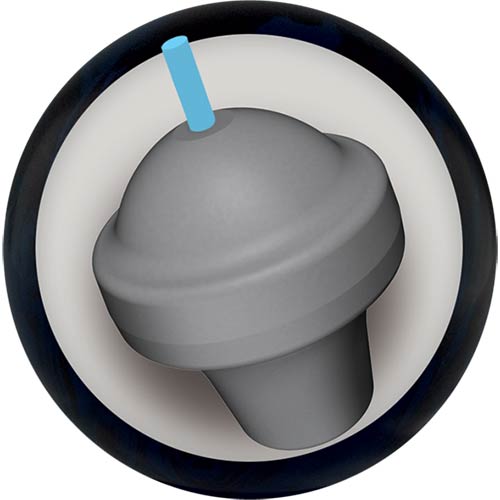
Symmetrical cores have equal weight distribution around the center, creating predictable and controllable ball motion. If you cut a symmetrical core in half from top to bottom in any direction, the two halves would fold into each other perfectly. These cores are ideal for bowlers who want consistent, repeatable reactions.
Symmetrical Core Characteristics:
-
Smooth, arcing ball motion – More predictable hook shape with a controlled change of direction at the breakpoint
-
Less sensitive to ball speed changes – Forgiving for inconsistent releases, making them a strong choice for developing bowlers
-
Two core spec variables (RG and Differential) – Simpler drilling decisions compared to asymmetrical balls
-
Consistent energy transfer – Reliable pin carry with a smoother transition from skid to hook to roll
-
Often preferred by rev-dominant players – Higher rev rate bowlers can use symmetrical shapes for control without sacrificing backend motion
Best For:
Beginners learning proper form, league bowlers wanting consistency, players with higher rev rates who need control, and anyone seeking versatile equipment for varying lane conditions. Most manufacturers’ entry-level and mid-performance lines use symmetrical core designs.
Popular Symmetrical Core Examples:
Inverted Fe2 Technology (Storm Hy-Road series), C3 Centripetal Control Core (Roto Grip IQ Tour series), Centripetal cores with DynamiCore (Brunswick), and many more proven designs.
Asymmetrical Cores: Maximum Performance
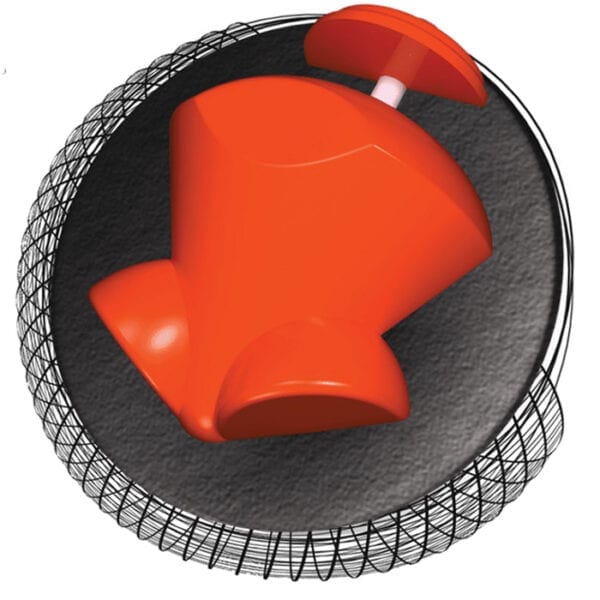
Asymmetrical cores feature unbalanced weight distribution that creates a mass bias — if you cut the core in half from top to bottom, something sticks out on one side, preventing the halves from folding into each other evenly. This imbalance generates stronger, more angular ball reactions and higher hook potential. Roughly 85% of today’s high-performance and upper mid-performance balls use asymmetrical core designs.
Asymmetrical Core Characteristics:
-
Stronger backend reaction – More angular entry angle into the pocket, responding to friction more quickly than symmetrical balls
-
Higher hook potential – Considerably more track flare than symmetrical designs, even at longer pin-to-PAP distances
-
Three core spec variables (RG, Differential, and Intermediate Differential) – The added third axis gives pro shop operators significantly more drilling layout options
-
Better performance in heavy oil – The core imbalance helps the ball cut through heavier oil patterns and change direction decisively
-
Often preferred by speed-dominant players – Bowlers who need help getting the ball to change direction benefit most from asymmetrical designs
Best For:
Advanced bowlers with higher ball speeds, players facing heavy oil conditions, tournament competitors needing maximum performance, rev-challenged bowlers who need help from the ball to hook, and anyone wanting aggressive backend reaction with expanded layout versatility.
Popular Asymmetrical Core Examples:
RAD-E Core and A.I. Core Technology (Storm), Ikon and Paragon cores (Roto Grip), Zone Asymmetric with DynamiCore (Brunswick), and other high-performance designs.
Find Bowling Balls by Core Specifications
Search our complete database by the specific core characteristics that matter to your game
By RG (Radius of Gyration)
Find balls by rev-up timing (2.46″-2.80″)
Search by RG
Bowling Ball Core Libraries by Brand
Explore core designs from all major bowling ball manufacturers
How to Choose the Right Core for Your Game
Select the perfect core design based on your skill level, playing style, and typical lane conditions.
For Beginners & Developing Players:
Start with symmetrical cores that offer predictable, controlled reactions. Look for moderate RG values (2.48-2.53) and lower differentials (0.020-0.040) that provide forgiveness while you develop consistency. Most entry-level and mid-performance lines from every major manufacturer use symmetrical designs for this reason.
For Intermediate Players:
Experiment with both symmetrical and asymmetrical cores. Focus on finding cores that complement your rev rate and speed. Medium differentials (0.030-0.050) offer versatility for different lane conditions. This is where building a proper arsenal with both core types starts to matter.
For Advanced Players:
Consider high-performance asymmetrical cores for maximum versatility. Look for cores with higher differentials (0.045+) and specific RG values that match your technique and the oil patterns you face. The added intermediate differential in asymmetrical designs gives your pro shop operator a third variable — PSA (preferred spin axis) placement — to precisely tune ball motion.
Core Matching Tips:
- Low Rev Rate / Speed Dominant: Asymmetrical cores help the ball change direction — choose cores with lower RG values for earlier rev-up
- High Rev Rate / Rev Dominant: Symmetrical cores provide control — higher RG cores give you length and a controlled backend reaction
- Dry Lanes: Lower differential cores prevent over-reaction and keep the ball from hooking too early
- Heavy Oil: Higher differential cores cut through oil patterns and generate the track flare needed to grip the lane
- Building an Arsenal: Most competitive bowlers carry both symmetrical and asymmetrical balls to cover different conditions and transition periods
Bowling Ball Core FAQ
Answers to the most common questions about bowling ball cores and specifications
What's more important — core type or coverstock?
Both matter, but they do different jobs. The core determines the ball’s fundamental motion pattern — when it revs up, how much it flares, and the overall shape of its path down the lane. The coverstock determines how the ball interacts with the lane surface — how it reads oil, when it starts to grip, and how aggressively it hooks. Think of the core as the engine and the coverstock as the tires. Start with the right core for your game, then fine-tune with surface adjustments (sanding, polishing) to dial in the reaction for specific conditions.
Can I change my ball's reaction without buying a new one?
Yes. Surface changes like sanding and polishing can significantly alter how your ball reads the lane. Sanding the coverstock creates more friction and an earlier, smoother hook. Polishing creates less friction for more length and a sharper backend. Your pro shop operator can also adjust the surface grit to fine-tune the reaction. However, the core’s basic characteristics — RG, differential, and mass bias — remain constant once the ball is manufactured. You cannot change the core without changing the ball.
How many different core types should I have in my arsenal?
Most competitive league bowlers benefit from 2-4 different core designs covering different situations: a low-differential symmetrical for spares and dry lanes, a medium-differential option for typical house conditions, and one or two higher-performance cores (often asymmetrical) for heavier oil or tournament patterns. The specific number depends on the variety of conditions you face — a bowler who only bowls one house league may only need two balls, while a tournament competitor might carry six or more.
What's the difference between RG and differential?
RG (radius of gyration) measures how the core’s mass is distributed relative to the center of the ball — it tells you how quickly the ball wants to rev up. Lower RG means faster rev-up and an earlier roll; higher RG means more length before the ball begins its hook phase. Differential measures the difference between the ball’s maximum and minimum RG values. It determines track flare potential and overall hook potential — higher differential means more flare, which translates to a stronger hook. USBC allows RG values between 2.46″ and 2.80″, and limits differential to a maximum of 0.060″.
Do lighter weight balls have the same cores as 15-16 pound versions?
Not always. Lighter weight balls (12-13 lbs.) often use different core shapes than their heavier counterparts because the density requirements change. The 14-16 pound versions use denser core material to achieve the target RG and differential values. Those same dense cores can’t always be used in lighter balls, so manufacturers design different shapes at different densities that produce similar RG and differential numbers. The result is comparable performance characteristics, but the physical core shape may look different inside the ball.
What does 'intermediate differential' or 'mass bias' mean on an asymmetrical ball?
Intermediate differential (sometimes called mass bias differential) measures the degree of asymmetry in the core. It’s the difference in RG between the Y (high RG) axis and the Z (intermediate RG) axis. A higher intermediate differential means more asymmetry, which causes the ball to respond more quickly and aggressively to friction at the breakpoint. Per USBC specifications, balls with an intermediate differential of 0.010″ or greater must have a PSA (preferred spin axis) marking, which gives your pro shop operator an additional variable to work with when choosing a drilling layout.
Why do some bowling balls with the same core react differently?
Because the core is only one piece of the equation. The same core paired with different coverstocks will produce noticeably different reactions — a solid coverstock will read the lane earlier and produce a smoother arc, while a pearl coverstock with the same core will push longer and snap harder on the backend. Surface preparation (grit level), drilling layout, and the bowler’s own style (speed, rev rate, axis tilt) all influence the final ball motion. This is why manufacturers often release the same core in multiple coverstock variations — it gives bowlers different reaction shapes built on the same proven core foundation.
Why Bowlers Trust BowlersMart
Comprehensive, accurate, and regularly updated core information backed by decades of industry experience
Complete Database
Comprehensive core information from all major manufacturers with detailed specifications and performance data.
Expert Analysis
Professional insights from our network of 50+ certified pro shop operators across the country.
Regular Updates
Latest core designs added continuously as manufacturers release new products each season.
Free Resources
Access to core research tools, educational content, and selection guides — all at no cost.
















 Balls
Balls Shoes
Shoes Bags
Bags Accessories
 Apparel
 Deals
Deals