
 Pay in 4 with Afterpay
 Personalized Bowling Bags
 Personalized Shammies
 Personalized Bowling Jerseys
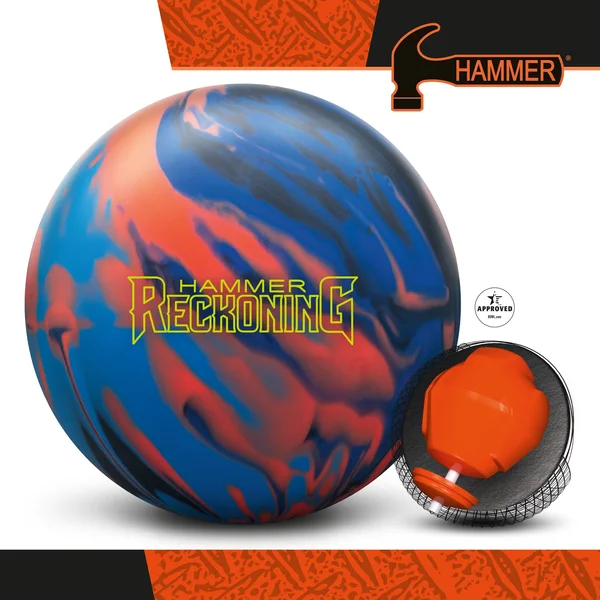 Shop Hammer Balls
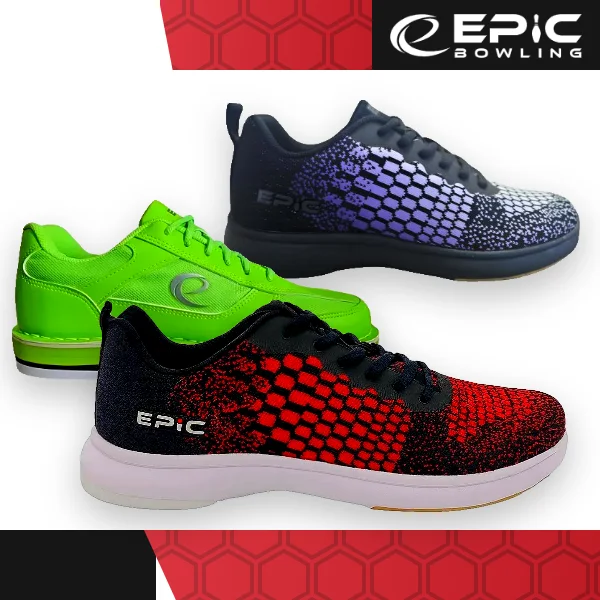 Shop Epic Shoes
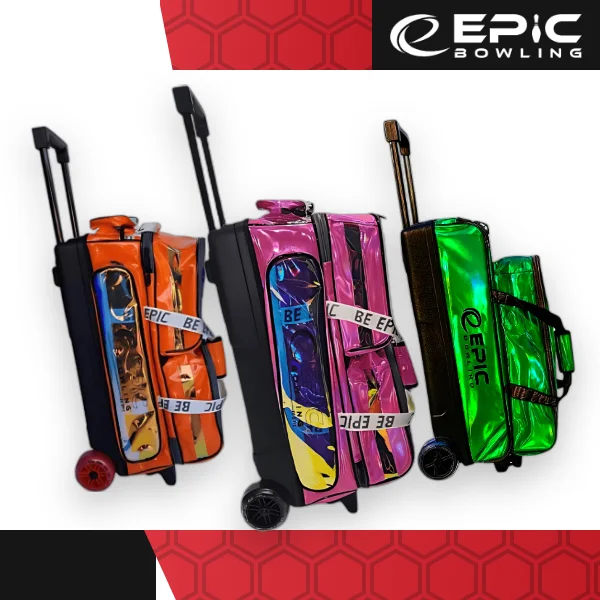 Shop Epic Bags
Bowling ball rules
Is My Bowling Ball Legal? USBC Ball Rules Explained
The six checks that make a USBC-legal bowling ball, in plain terms
A legal USBC bowling ball weighs 16 pounds or less, measures 8.500″ to 8.595″ in diameter, tests at 73D hardness or harder (new slow oil-absorbing urethane-type covers must be 78D to be approved for sale; older approved urethane stays legal in leagues), has no balance hole, carries no more than 5 gripping holes all used on every delivery, and appears on USBC’s Approved Ball List. During competition the surface cannot be altered or cleaned with a liquid without permission once play has begun. Check your ball at bowl.com/approvedballlist.
Have a bowling question? Search the learning center.
USBC ball specifications
| Spec | Limit |
|---|---|
| Weight | 16.00 lb maximum. No minimum weight. |
| Diameter | 8.500" minimum, 8.595" maximum, at the time of manufacture. |
| Roundness | No minimum; 0.010" maximum total indicator readout (TIR) out-of-round at manufacture. USBC specifies diameter and roundness, not circumference. |
| Hardness | 73D minimum for every ball. Since December 31, 2025, a new slow oil-absorbing, urethane-type ball must be 78D to be approved for sale. Balls approved before then stay approved; some national tournaments restrict them. |
| Static weight allowances | Over 10 lb: up to 3 oz top/bottom, side and thumb/finger. 8 to 10 lb: 2 oz top/bottom, 3/4 oz side and thumb/finger. Under 8 lb: 3/4 oz top/bottom. |
| Balance holes | Not allowed, at all, since August 1, 2020. Any gripping hole not used with a thumb or finger on every delivery counts as a balance hole. |
| Gripping holes | Maximum 5: one per finger and one for the thumb, all on the same hand, all used on every delivery. Maximum 1-9/16" diameter, 4-1/2" deep. |
Coefficient of restitution is suspended, not active. The manual still lists a 0.650 to 0.750 COR range, but it has been indefinitely suspended since January 2024 and is not currently enforced.
Drilling rules, in plain terms
- Gripping holesUp to 5 total: one per finger and one thumb hole, all for the same hand, each no more than 1-9/16" across and 4-1/2" deep, and every one of them used on every delivery.
- No thumb holeA ball drilled without a thumb hole needs a scribed or engraved “+” marking the grip orientation, and the palm must cover it on delivery.
- Vent holesOne per finger or thumb hole is allowed, maximum 1/4" diameter, at any depth. Any other hole not used for gripping is not allowed.
- Inspection mill holeOne is permitted, maximum 5/8" diameter and 1/8" deep.
- Inserts, slugs and plugsMust not extend beyond the ball’s surface, must leave no interior void, and must be made of material with a density between 0.9 and 1.5 g/mL.
- Removable devicesA removable thumb insert is allowed only if it is non-metallic, locks in place during delivery, and is never used to adjust static balance.
Surface rules during competition (Rule 18)
Before competition begins, you can sand, polish or clean your ball however you like, subject to USBC’s own approved-cleaner standards. Once competition starts, the rules tighten.
- No abrasives once play beginsThe surface cannot be sanded or polished once any bowler has thrown a ball for score in that league or tournament, including between events at the same tournament.
- No liquid cleaners without permissionSince August 1, 2019, no liquid cleaner or cleaning agent may be used on the ball during competition without a league or tournament official’s permission.
- No foreign substancesPowder, rosin, marker, paint or any other foreign material on the ball is not allowed; a ball found with one is removed from competition.
- Whole-surface ruleIf the surface is altered before play, the entire ball must be treated uniformly. Prepping only the track, not the whole ball, is an unfair-tactics violation.
Ball spinners and oil extractors have no separate rule. Neither device is named in the rulebook or the specifications manual. Using one once competition has started falls under the same ban on altering or cleaning the ball.
The USBC Approved Ball List
Apart from house balls, any ball used in USBC-certified competition must appear on the Approved Ball List. Check a specific ball at bowl.com/approvedballlist, updated weekly: search by brand, or download the current full list as a PDF. The related Non-conforming Bowling Ball List and the two National Tournament Ineligible Ball Lists are linked from the same equipment specifications section of bowl.com.
Revoked vs. national tournament exclusion
| Status | What it means | Example |
|---|---|---|
| Revoked | USBC withdraws approval entirely. The manufacturer must stop producing and distributing the ball as of USBC’s set date. Illegal in any USBC-certified competition, leagues included. | Storm Spectre: approved Dec 2021, revoked effective Mar 14, 2022, after spot-check testing found a 98.6% defect rate against the hardness spec. |
| National tournament exclusion | The ball stays USBC-approved and legal for sale, leagues and local tournaments, but is placed on a list making it ineligible for specific national events. | The 2026 urethane rule: previously approved urethane balls remain on the Approved Ball List, just excluded from certain national tournaments. |
A second example of revocation: the 2016 and 2017 Purple Hammer balls (serial numbers starting with 6 or 7, made at the Ebonite plant) were first placed under a national-tournament-only ban on March 7, 2022 pending investigation of a hardness claim, then fully revoked on March 21, 2022. Brunswick, the current Hammer brand owner, offered an exchange program. This was a hardness-specification enforcement action on a specific production run, not part of today’s urethane/78D rule, and it predates that framework.
Which rules apply to you
| Setting | Ball specs | Surface/cleaner rule (Rule 18) | Urethane/78D rules |
|---|---|---|---|
| League bowling | Applies in full | Applies once any bowler throws a ball for score | No change, unless the league adopts a restriction |
| Local tournament | Applies in full | Applies in full | No change, unless the organizer adopts a restriction |
| USBC national tournament | Applies in full, plus on-site hardness spot checks | Applies in full | Applies, per event: some ban urethane outright, some require 78D |
| PBA Tour | USBC specs generally, plus PBA’s own urethane rule | Not covered by this page’s sources | PBA’s own 78D rule, not USBC’s 2026 restrictions |
Urethane specifically is its own, longer topic: see USBC urethane ball rules 2026.
Questions bowlers ask
What makes a bowling ball illegal in USBC play?
Being over 16 lb, outside the 8.500" to 8.595" diameter range, under 73D hardness, having a balance hole, having more than 5 gripping holes, or not appearing on the USBC Approved Ball List.
Can I drill my own gripping holes anywhere I want?
No. You get up to 5 gripping holes total, one per finger plus one thumb hole, all for the same hand, each within the size limits, and every one of them must be used on every delivery or it counts as an illegal balance hole.
Are balance holes ever allowed?
No, not since August 1, 2020. A gripping hole that is not used on every delivery, including an unused finger or thumb hole, counts as a balance hole and is not allowed. One vent hole per finger and thumb hole, and one inspection mill hole, are still permitted.
Can I clean my ball during a game?
Only with permission from a league or tournament official. No liquid cleaner may be used on the ball during competition without it, a rule in effect since August 1, 2019.
How do I check if my ball is still approved?
Search it on bowl.com/approvedballlist, which updates weekly. If it is not there, it may have been revoked; contact the manufacturer or your pro shop. A national tournament exclusion is different: the ball stays approved and legal in leagues, and only the named national events bar it, so check their ineligible lists too.
What is the difference between a revoked ball and a nationally excluded one?
A revoked ball loses USBC approval entirely and cannot be used anywhere in certified play, including leagues. A nationally excluded ball stays approved for sale, leagues and local tournaments, just not at the specific national events that exclude it.
Do these rules apply to PBA Tour events?
PBA generally follows USBC’s ball specifications but sets its own separate urethane hardness rule. See our urethane rules page for the PBA’s 78D requirement.
Sources and method
USBC Equipment Specifications and Certifications Manual. The source for every weight, diameter, hardness, balance and gripping-hole limit on this page.
USBC Playing Rules 2026-27. Rule 18 and the equipment chapter, for surface rules during competition and how an out-of-specification ball is handled.
USBC urethane rule FAQ. For the 78D hardness classification referenced above; see our urethane rules page for the full tournament-by-tournament breakdown.
PBA urethane FAQ. For the PBA Tour’s own separate urethane rule, referenced in the “which rules apply to you” table.
Next lesson
Shop bowling balls. Free shipping on US orders.
