

 Pay in 4 with Afterpay
 Personalized Bowling Bags
 Personalized Shammies
 Personalized Bowling Jerseys
 Shop Hammer Balls
 Shop Epic Shoes
 Shop Epic Bags
Bowling tips
How to Hook a Bowling Ball
Why a ball hooks, the release that creates it, and the equipment that makes it possible
A bowling ball hooks because two things work together: the rotation your fingers put on it at release, and a coverstock with enough friction to grip the lane and act on that rotation. A house ball, hard plastic over a balanced core, has almost none of that friction, so it rolls close to a straight line no matter how clean your release is. Once your approach and release are consistent, a reactive resin ball with a fingertip grip is the recommended starting setup for learning to hook, covered below.
Have a bowling question? Search the learning center.
Why a bowling ball hooks
A ball hooks because its coverstock grips the lane surface instead of sliding across it, and because your release puts it on a tilted axis rather than a straight one. As the ball travels down the lane, that tilted rotation gradually pulls it off a straight line, the curve bowlers call a hook. That angled entry into the pocket, instead of straight into the pins, is what creates stronger pin action, the practical reason hook helps scores beyond how it looks.
Coverstock material decides how much friction is available to work with. A plastic or polyester house ball is hard and smooth, built to slide rather than grip, with a balanced core that does nothing to help the ball change direction. A reactive resin ball has a porous cover that grabs the lane and a core built to be imbalanced on purpose, which is what lets rotation turn into an actual change of direction. See our coverstock guide for how solid, pearl, hybrid and urethane covers each behave.
| Factor | What it does | How to adjust it |
|---|---|---|
| Coverstock material | Decides how much friction is available to grip the lane at all. Plastic and polyester barely grip; reactive resin grips significantly more, though hook potential still varies by cover and ball. | Move up from a plastic ball to a reactive one; see Is it me or my ball below and our coverstock guide. |
| Rotation at release | The tilt and spin your hand puts on the ball the instant it leaves your fingers. More rotation on a tilted axis means more hook. | Rotate your fingers around the side of the ball as your thumb releases; see The hook release, step by step below. |
| Ball surface (grit) | A rougher surface reads the lane earlier for a smoother, more gradual motion. A smoother, more polished surface skids further before making a sharper move at the end. | A pro shop can resand or repolish the cover; see Surface and lane oil below. |
| Lane oil | More oil on the boards delays when the ball starts to grip and hook. Drier boards let it start sooner. | Watch where your ball starts to turn and adjust your target as the oil changes through a game. |
Each row is explained in its own section below.
The hook release, step by step
- 1
Get fitted for a fingertip grip.USBC’s own coaching page draws the line simply: a conventional grip seats your fingers to the second joint, while a fingertip grip seats them only to the first joint, a shallower depth that lets your fingers lift and rotate the ball at release instead of just carrying it. National Bowling Academy coach Jason McEwen adds a rule that applies either way: limit your grip pressure. Squeezing the ball does not add hook, it takes hook away.
- 2
Start from your normal stance and aim.USBC’s coaching page keeps this step simple: take the same stance and starting position as your usual delivery, and line the ball and your shoulder up with your target the way you would for a straight shot, expecting that target to shift once you know how much your own ball hooks. Keeping the same backswing height from shot to shot matters too: a higher backswing adds ball speed and hook, but only when you repeat it consistently, since changing it shot to shot changes your speed and motion unpredictably.
- 3
Rotate your fingers around the ball as your hand comes through it.This is where hook is actually created, and two coaches describe two different parts of it. USBC’s own coaching page describes the fingers: the thumb releases first while the fingers rotate around the side of the ball. A right-handed bowler’s fingers rotate counter-clockwise doing this; a left-handed bowler’s rotate clockwise, the mirror motion. Jason McEwen describes the hand itself: take your hand through the ball rather than around it, releasing with your fingers under the ball’s equator for the most leverage, so the ball leaves off the front of your hand.
- 4
Follow through toward your target.McEwen ties the finish to the whole delivery, not just the hand: the bowling shoulder sits lower than the other shoulder, the slide foot and hips point at the target, and the ball should be as close to the slide foot as possible at the moment of release. Keep your arm moving toward the target after the ball leaves it rather than stopping it short.
Finger inserts and full thumb insertion add comfort and control once a ball is drilled to fit your hand, and a snug thumb hole is normal at first rather than a sign the fit is wrong. See our how to hold a bowling ball guide for grip and span basics.
Build the motion in stages: keep your delivery straight and accurate first, then add a small amount of finger rotation once that is consistent, and increase it gradually from there rather than all at once.
Is it me or my ball?
Before chasing a hook, make sure your approach and release are consistent. Our beginner bowling tips page recommends throwing straight while you learn the approach, and waiting to add a hook until your release is consistent.
If your release already looks right and the ball still will not hook, possible causes include the ball itself. Plastic balls have limited hook potential: the material is built to slide rather than grip, so it rolls close to a straight line no matter how clean the release is.
A reactive resin ball, with a porous cover that grips the lane and a core built to keep rotating instead of settling into a straight roll, is the recommended next step for more hook. Urethane and basic reactive covers give moderate hook potential and are easier to control while you are learning; stronger reactive covers add more once your release develops. Epic Bowling makes entry-level reactive balls.
See our entry-level bowling balls.
Once your release is repeatable and you want more motion than an entry-level ball gives you, a high-performance ball with a stronger cover and a more dynamic core is a further step up.
Shop high-performance bowling balls
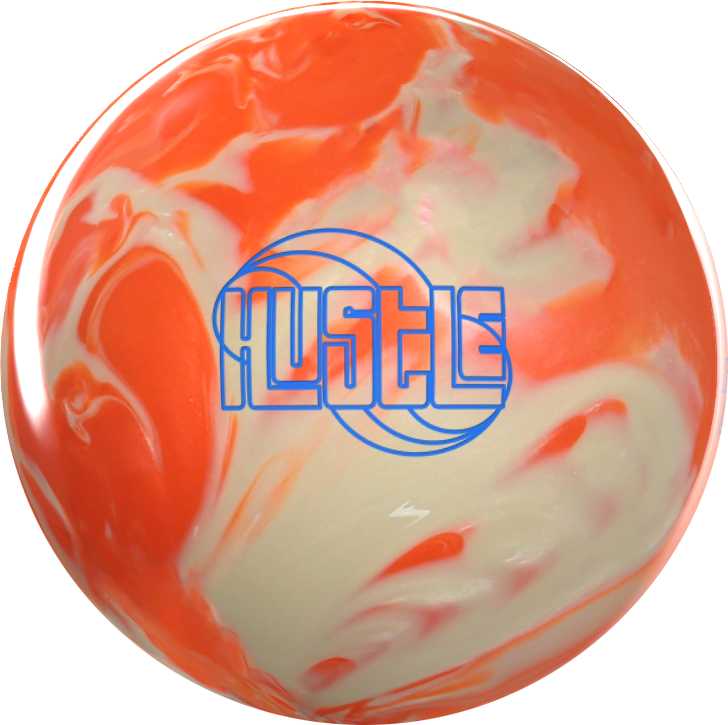
Entry-level reactive bowling balls
Ranked by what BowlersMart customers bought in the last 30 days. Prices and stock are updated nightly.




Surface and lane oil
The texture on a ball’s cover, measured by a grit number, changes how early it starts to read the lane. A lower grit number means a rougher surface, which reads the lane sooner and produces a smoother, more gradual motion; a higher grit number, closer to a polished finish, lets the ball skid further through the front of the lane before making a sharper move near the pins. Changing the surface is one of the simplest ways to change how a ball hooks without buying a new one.
The technique itself is straightforward: an abrasive pad, kept wet along with the ball, is worked around the cover in small circles, with the ball rotated through a few positions so the whole surface gets even coverage, then wiped down to clear the dust before the ball is used. See our ball cleaning and maintenance guide for keeping a cover clean between surface changes, and our coverstock guide for how each cover material hooks to begin with.
Lane oil changes when a ball starts to hook too: more oil on the boards delays the hook, and drier boards let it start sooner. A full guide to reading lane conditions is coming to our learning center; in the meantime, watch where your own ball starts to turn and adjust your target as the oil on the lane changes through a game.
Common hook mistakes
- Forcing the hook with your wrist or arm.Trying to create hook by twisting the wrist or whipping your arm across your body works against you. Hook comes from your fingers rotating around the ball as your hand comes through it, not from a forced wrist snap or a wild arm swing.
- Squeezing the ball.Gripping the ball tightly to feel more in control reduces the lift and rotation you are trying to create. A relaxed grip, firm enough to hold the ball securely, releases more cleanly.
- Letting your thumb exit late.Your thumb should release first, near the bottom of the swing, with your fingers finishing the rotation last. Holding the thumb in the ball too long trades away control.
- Changing your release timing from shot to shot.Varying when you release relative to your swing produces unpredictable ball motion. Repeating the same timing from shot to shot is what makes a hook repeatable.
- Expecting a house ball to hook.A house ball is molded from hard plastic over a balanced core, built for durability rather than hook. No amount of technique makes it curve the way a reactive ball does.
- Changing your release before checking your ball.If your release looks sound and the ball still will not hook, check Is it me or my ball above before reworking your swing.
Two-handed bowlers
Two-handed bowlers create hook the same way: friction from the coverstock, acted on by rotation at release. Using both hands through the approach can add rev rate, which can mean more hook potential, but the same coverstock and surface rules above still apply. See our two-handed bowling guide for the technique, rules and equipment questions specific to that style.
Questions bowlers ask
How do you hook a bowling ball?
By pairing a release that rotates your fingers around the side of the ball as your thumb releases with a ball that can grip the lane. A reactive resin cover is the recommended starting choice over plastic for that grip. See The hook release, step by step above for the full breakdown.
Is spinning a bowling ball the same as hooking it?
No. Hook is the ball’s curved path down the lane, created by an appropriate release, the fingers rotating around the ball as described above. Spinning your wrist on its own does not create that path and is a common mistake rather than a technique; see Common hook mistakes above.
How long does it take to learn to hook a bowling ball?
Learning and controlling a hook takes practice; progress varies. Build it in stages: keep your delivery straight and accurate first, then add rotation gradually once your release is consistent.
Can a house ball hook?
Not meaningfully. House balls are molded from hard, smooth plastic over a balanced core, built for durability and a straight roll, not for hook. A reactive resin ball fitted with a fingertip grip is the recommended way to hook consistently.
What is the easiest way to hook a bowling ball for beginners?
Make sure your approach and release are consistent first; our beginner bowling tips page recommends throwing straight while you learn the approach. From there, a reactive resin ball with a fingertip grip is the recommended starting setup, built around a release that rotates your fingers around the ball rather than forcing a hook out of a plastic ball.
Why is my bowling ball not hooking?
Possible causes include a plastic or house ball with little to grip the lane, a grip held too tight, or a release that pulls straight through the ball instead of rotating the fingers around its side. See Is it me or my ball and Common hook mistakes above.
Does the ball surface change how much it hooks?
Yes. A rougher surface, a lower grit number, reads the lane earlier for a smoother motion; a smoother, more polished surface skids longer before hooking harder near the pins. See Surface and lane oil above.
Do two-handed bowlers hook the ball differently?
The physics are the same: coverstock friction acted on by rotation at release. Two hands through the approach can add rev rate and hook potential. See our two-handed bowling guide.
Sources and method
USBC coaching guidance. The grip depth, stance and release steps are from USBC’s own "Throw a Great Hook" coaching page on bowl.com.
National Bowling Academy coaching. Release and follow-through detail is from National Bowling Academy coach Jason McEwen’s "A Beginner’s Guide to Bowling Release."
Our tools and guides. The coverstock guide, the ball cleaning and maintenance guide, the two-handed bowling guide, the how to hold a bowling ball guide and the beginner bowling tips page answer the related equipment, grip and approach questions.
Products shown. The product rail shows what bowlers have bought most from us in the last 30 days, with current prices and stock, refreshed nightly.
